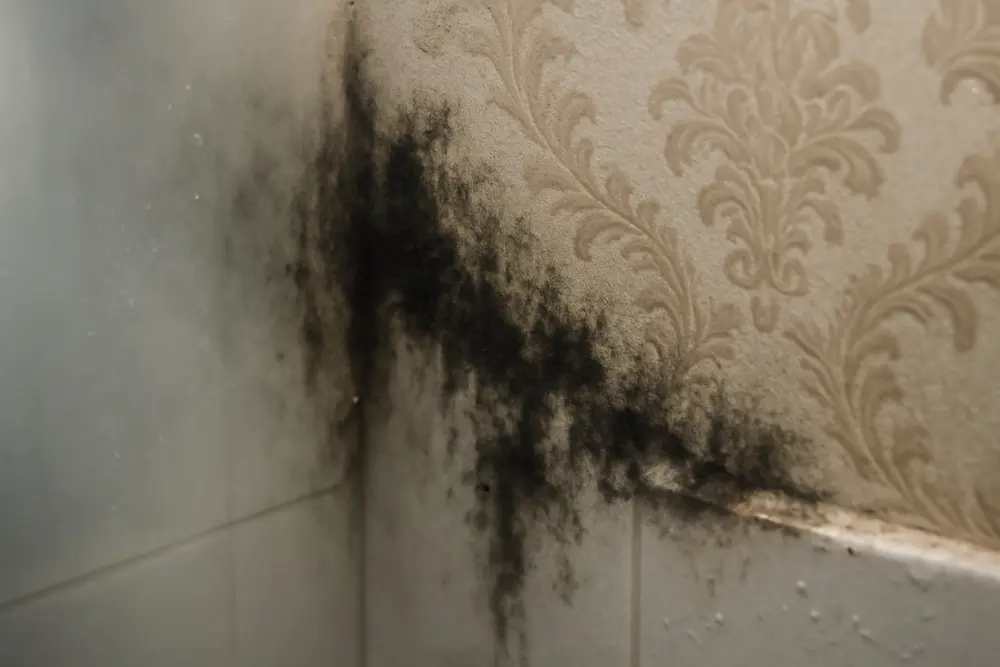

If your bathroom smells like a gym sock even after you scrub it within an inch of its life, there is a good chance the issue is hiding behind that shiny vinyl or foil wallpaper. The front might look perfect with zero stains or bubbling, but the backside can be a steamy mold party. Vinyl wallpaper acts like a plastic raincoat on your walls. It blocks moisture from getting out, turns cool exterior walls into condensation magnets, and quietly feeds mold with paper backing and paste. Bathrooms and kitchens are humidity central, which makes them prime real estate for hidden growth that trashes drywall and noses alike.
What Makes Vinyl Wallpaper Risky
Vinyl and foil wallpapers are low-perm materials that barely let moisture pass. Building science folks call these Class I vapor retarders, which means they are incredibly good at stopping vapor from moving through a wall. Steam from showers, cooking, or dishwashing hits those walls, the walls cool off, and the water vapor condenses behind the vinyl layer. No drying equals a soggy, dark, oxygen-rich space made of paper and glue. Mold approves this message.
Exterior walls raise the stakes. They run cooler, especially where insulation is thin or missing. When interior air meets a cooler surface, it hits dew point and leaves moisture behind the wallpaper. That moisture pools along seams, around outlets, and near baseboards where air leaks and temperature swings are common. With vinyl on top, that moisture lingers far longer than it would with a breathable paint or paper finish. Add the cellulose buffet from paper backings and adhesives and you have a mold nursery even if the visible surface looks flawless.
Multiple building and indoor-air resources have flagged vinyl as a moisture trap in steamy rooms and on exterior walls. If you want to see what this looks like in practice, check out guidance on vapor barriers and mold under wallpaper from sources like Howard Environmental and IndoorHumidity. They explain how low-perm surfaces lock in moisture and why seams and corners are usually the first places to fail.
Signs You May Have Hidden Mold
Hidden growth rarely stays hidden forever. Here are the early hints most homeowners notice before the big reveal.
| Sign | Description |
|---|---|
| Musty odor | The classic giveaway. A persistent earthy smell near wallpapered walls, even when the room looks spotless. |
| Bubbling or peeling | Edges and seams lift where condensation keeps soaking the paper backing and paste. |
| Discoloration | Yellowing, brown tea stains, or dark spotting at seams, baseboards, or around switches and vents. |
| Soft or damp drywall | A wall that feels spongy when pressed or looks wavy is usually water damaged behind the covering. |
| High indoor humidity | A hygrometer reading above roughly 60 percent in normal conditions means mold risk goes way up. |
Why Baths And Kitchens Get Hit
Bathrooms and kitchens load the air with moisture. Hot showers, boiling pots, dishwashers venting warmth, and constant handwashing all create steam. If that moisture cannot escape quickly, it soaks into the nearest cooler surface. Vinyl wallpaper blocks drying, so condensation gets stuck in the wall system instead of evaporating into the room.
Ventilation is the second big problem. Many fans are underpowered, dirty, or just plain loud so nobody runs them long enough. Some fans vent into an attic or crawlspace instead of outside. That setup moves the problem rather than solving it. Even in newer remodels, exterior venting sometimes gets skipped because it is one more hole to cut and cap through the building envelope. The result is lingering humidity that keeps feeding vinyl wallpaper mold day after day.
Then there are cold spots. Any exterior wall behind tile, mirrors, cabinets, or heavy furniture can run several degrees cooler than surrounding surfaces. Corners, rim joists, and wall sections that meet unconditioned spaces are prime condensation zones. Slap a non-breathable film over those, and you have a slow-bake situation for mold growth.
Safe Removal And Remediation
Before you reach for a scraper, find and control the moisture source. Fix leaky plumbing, recaulking failures, or a broken wax ring under a toilet. Upgrade ventilation if it is weak. Dry out the room thoroughly. If the wall keeps getting wet, any cleanup is just a short intermission before the sequel.
Plan for safety. Wear an N95 or better, gloves, and eye protection. Cover floors with plastic. Shut down the HVAC in that zone so you do not send spores throughout the house. Close doors, tape off returns and supply vents, and keep a contractor bag handy for debris. Lightly mist the wallpaper as you work to reduce dust and spore drift.
Start at seams or a loose corner. Peel slowly and carefully to limit tearing. As the backing lifts, check both the wallpaper and the drywall. If the drywall face paper is stained black or green, or the gypsum core is soft, that section likely needs removal. Mold entrenched in porous materials like drywall, paper, or insulation usually cannot be cleaned thoroughly enough to be considered safe. Cut out damaged areas in controlled sections, bag them immediately, and keep the workspace tidy to limit spread.
For hard, non-porous surfaces like metal, glass, and some tile, a detergent wash, rinse, and thorough dry can be effective. Porous and semi-porous materials like drywall, MDF trim, and unsealed wood generally need removal if the growth is more than a thin surface film. Skip bleach on porous materials. It does not penetrate deeply enough and can leave extra moisture behind. Use cleaners labeled for mold cleanup as directed, but the best long-term answer is replacing saturated, moldy building materials and correcting moisture issues so the problem does not come back.
If the affected area is large, if you see heavy growth across multiple walls, or if someone in the home has asthma, allergies, or other respiratory concerns, it is time to bring in licensed pros who handle containment, negative air, HEPA filtration, removal, and proper drying. Best Option Restoration of Travis County handles wall and ceiling mold, moisture diagnostics, safe removal, and rebuild. You can learn more about our process on our Mold Clean Up Services page.
Bathroom Humidity Control That Works
Humidity management is where most homeowners win or lose this battle. You do not need a lab-grade setup. You need consistent ventilation, a quick-drying room, and a way to measure what is happening so you can adjust. Aim for 30 to 50 percent relative humidity indoors during normal weather. If your number hangs above 60 percent for long stretches, mold risk jumps and your walls will tell the tale.
Pick a quiet, high-capacity exhaust fan that actually vents outdoors. The sticker on the fan shows the CFM rating. Match it to room size and consider upgrading to a humidity-sensing model that turns itself on and off automatically. Run it before a shower, keep it running during, and let it continue for at least 20 to 30 minutes after you are done. Keep the door cracked open or open it wide right after you finish so fresh air moves through. Clean the fan grill every few months. A dirty fan is a lazy fan.
In kitchens, a good range hood that vents outside is the MVP. Boiling pots and simmering sauces pump moisture into the air for hours. Turn the hood on whenever you cook, and keep lids on pots if you can. If your kitchen lacks a hood, a through-wall exhaust fan is a budget upgrade that can make a real difference. Windows and screen doors help on dry days, but they are not a substitute for powered exhaust in humid climates.
When weather is swampy, consider a small dehumidifier for the bathroom or kitchen area. Place it away from direct splashes but close enough to capture steam after showers or cooking. A simple digital hygrometer on the counter will give you instant feedback. If your humidity spikes after showers and takes hours to fall, you have a ventilation gap to fix.
Smarter Wall Finishes And Materials
Even with good ventilation, wall finishes matter. Skip heavy vinyl and foil wallpapers on exterior walls or in steamy rooms. If you love the look of wallpaper, choose breathable options with higher perm ratings and pair them with breathable primers. Ask the manufacturer whether a product is rated for bathrooms and what the perm rating is. If they dodge the question, that is your answer.
High-quality paint is the safer play in humid spaces. Use a moisture-resistant primer with mold inhibitors, then finish with satin or semi-gloss paint that resists moisture and is easy to clean. On exterior-facing bathroom walls, consider an even more breathable system so any incidental moisture can dry toward the room. Keep caulking in good shape around tubs, showers, sinks, and backsplashes, and regrout where cracking starts. Silicone or hybrid sealants hold up better in wet areas than basic latex caulk.
Behind the scenes, insulation and air sealing reduce cold spots that trigger condensation. If a wall feels noticeably colder than others, or if you get recurring mold along the same seam or baseboard, you might have missing insulation or air leaks. Adding insulation or sealing gaps can be a game changer for chronic moisture trouble behind wallpaper and paint alike.
When To Call Best Option Restoration
Hidden mold behind wallpaper spreads faster than you think because you do not see it until it is chewing on drywall. If the visible or suspected area is larger than roughly 10 square feet, if growth spans multiple rooms, or if you keep scrubbing and it keeps coming back, call in a professional team. If anyone in the household is sensitive to mold or has respiratory issues, do not experiment with DIY removal on interior walls. Proper containment, negative air, and HEPA filtration are the difference between solving the problem and distributing it through your ducts.
Best Option Restoration of Travis County will track down the moisture source, open the right areas safely, remove contaminated materials, and dry the structure so the fix sticks. We handle bathrooms, kitchens, exterior walls, and everything in between. Get details or schedule service here: Mold Clean Up Services.
Quick Homeowner Checklist
Use this short checklist to keep vinyl wallpaper mold from starting or returning:
- Run a properly sized exhaust fan that vents outdoors for at least 20 to 30 minutes after showers and while cooking.
- Keep indoor humidity around 30 to 50 percent using a hygrometer, and add a dehumidifier if readings stay high.
- Avoid vinyl or foil wallpapers in bathrooms and kitchens, especially on exterior walls.
- Fix leaks, recaulk joints, and repair grout as soon as you spot issues.
- If you smell mustiness or see stains, investigate quickly instead of repainting over the problem.
FAQ: Vinyl Wallpaper Mold
Why does vinyl wallpaper mold form even when the surface looks fine?
Vinyl and foil wallpapers are low-perm barriers that trap moisture behind the surface. The space behind the vinyl has paper and adhesive that mold feeds on. The front face can look perfect while the backside is damp and growing colonies. Exterior walls, cold corners, and areas near seams are usually first to show damage once it finally breaks through.
Can I just paint over vinyl wallpaper to seal out mold?
That is a short-term bandage that usually makes things worse. Paint creates another low-perm layer, which further reduces drying. If there is moisture or mold behind the wallpaper, the hidden growth continues and can spread into drywall. Fix the moisture issue, remove the vinyl, and replace damaged materials before repainting with a moisture-resistant system.
How can I tell if my exhaust fan is doing enough?
Two quick checks help. First, match the CFM rating to your room size and upgrade if it is undersized. Second, use a hygrometer test. Take a hot shower with the fan running. If humidity spikes and does not drop close to baseline within 20 to 30 minutes after, you need more airflow, better ducting, or an additional dehumidifier. Also confirm the fan vents outdoors, not into an attic or crawlspace.
Is bleach the right cleaner for mold behind wallpaper?
Bleach is not the best choice for porous materials like drywall or paper because it does not reach deep enough. It can leave water behind and create a harsher environment without solving the root problem. For non-porous surfaces, detergent cleaning and thorough drying can help. For porous, moldy materials, removal and replacement are usually needed. The critical step is fixing the moisture source so growth does not return.
What is the best bathroom humidity control strategy?
Use a properly sized exhaust fan that vents outside, run it during and at least 20 to 30 minutes after showers, keep doors or a window open for airflow, and monitor conditions with a hygrometer. Maintain 30 to 50 percent indoor humidity. In humid regions or tight homes, add a dehumidifier. Pair that with breathable finishes instead of vinyl or foil wallpaper on exterior walls.
When should I call a professional for wallpaper mold?
If you see growth across a large section, suspect moisture inside wall cavities, notice recurring musty odors after cleaning, or have health concerns in the home, bring in a mold remediation company. Best Option Restoration of Travis County can assess the source, create containment, remove affected materials, dry the structure, and rebuild. Start here: Mold Clean Up Services.