
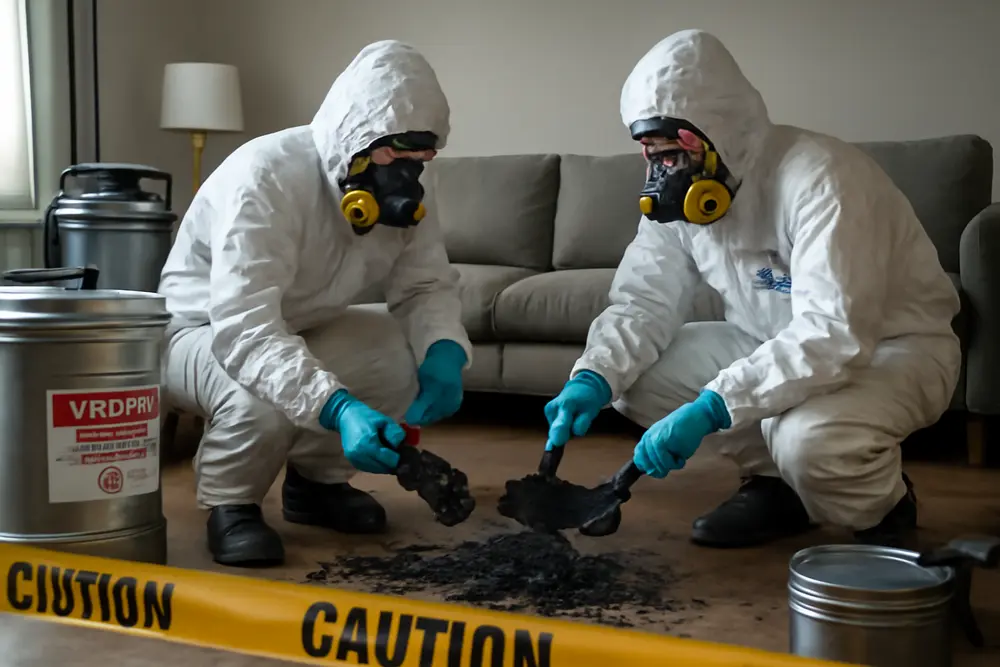

If your e-bike or power tool turned into a pocket-sized flamethrower, you already discovered that lithium-ion fire residue is not regular soot. It is acidic, fluoride-laced, metal-spiked micro-dust that keeps corroding and off-gassing long after the flames are out. Cleanup is not just about wiping walls. It is about neutralizing acids, removing toxic particulates, and proving the air and surfaces are safe again. Here is how lithium-ion fire residue actually behaves, what you should and should not do right away, and how pros handle battery fire decontamination so you can reenter without roasting your lungs or your wiring.
What Makes Lithium-Ion Fire Residue Different
Typical house fire smoke is nasty, but the chemistry from a lithium-ion battery fire is next-level. The electrolyte salt in many lithium-ion cells, often lithium hexafluorophosphate, breaks down in heat and moisture to release hydrogen fluoride (HF) and phosphoryl fluoride (POF3). Both are highly reactive, and HF is notorious for penetrating tissue and attacking calcium. On top of that, the soot carries ultra-fine particles loaded with organic carbon, elemental carbon, phosphates, fluorides, and metals like nickel, cobalt, manganese, and lithium. That mix is acidic and corrosive, which is why you might see clean metal frosting over with white or greenish oxidation even in rooms that never saw flame.
Several lab studies have mapped this chemistry. Researchers documented significant HF and POF3 generation during lithium-ion battery fires, with toxic gases and acidic aerosols present while the fire burns and even as extinguishing occurs. Fine particulate matter from these events is not only very small, which makes it easy to inhale, but also chemically active. It continues reacting with humidity and building materials for days. That is why simple soap-and-water wipes often fail, and why electronics and copper pipes start looking like they aged a decade in a weekend.
If you want the science receipts, start here: a Scientific Reports paper on toxic fluoride gas emissions during lithium-ion battery fires and peer-reviewed work characterizing PM2.5 from battery fires. Industry incident reports from recycling facilities also show how residue keeps corroding equipment far away from the burn seat. The short version is simple. You are not just fighting soot. You are fighting acids, fluoride salts, and metal-laced micro-dust that attacks anything it touches.
| Feature | Typical Smoke | Lithium-Ion Fire Residue |
|---|---|---|
| Main Gases | CO, CO2, VOCs | HF, POF3, CO, VOCs |
| Particles | Soot with organics | Acidic PM2.5 with fluoride and metals |
| Corrosion Risk | Moderate | High and ongoing with humidity |
| Cleaning Approach | Detergent, deodorization | Alkaline neutralization, HEPA-carbon filtration, specialized detergents, testing |
First Moves After The Flames Are Out
Before you grab a sponge, treat the scene like a hazmat-lite situation. Confirm the structure is safe to enter. If the pack is still present, do not handle it or toss it in the trash. Lithium-ion cells can reignite after appearing calm. Let the fire department or a qualified technician secure and isolate the pack. Keep kids, pets, and anyone with asthma out of the affected area.
Ventilation helps, but be smart. Open windows and run exhaust fans that vent to the exterior if you can set them up without spreading soot. Keep the HVAC system off so you do not blast fluoride-laced dust into every bedroom. If you must be inside, wear real PPE. That means a properly fitted respirator with acid-gas plus P100 particulate cartridges, eye protection, chemical-resistant gloves, and full-coverage clothing that you can bag and wash separately. This is not a dust mask situation.
Do not dry sweep. Do not power up sooty electronics to see if they still work. Do not smear acidic residues around with wet rags and dish soap. Lithium-ion fire residue needs neutralization first, not just cosmetic cleaning.
Do’s And Don’ts In The First 24 Hours
- Do shut down the HVAC and close supply vents in affected rooms.
- Do ventilate to the outside and keep doors to clean spaces closed.
- Do wear PPE suitable for acids and particulates if you must enter.
- Do isolate porous items that clearly absorbed soot.
- Don’t use household cleaners alone or wipe with water only.
- Don’t dry sweep or vacuum without a true HEPA unit.
- Don’t power up affected electronics or reset breakers feeding sooty circuits.
- Don’t ignore hidden zones like return-air cavities, under baseboards, or behind appliances.
How Pros Neutralize And Decontaminate
Battery fire decontamination is all about chemistry, containment, and confirmation. Here is how restoration teams trained on lithium-ion fire residue approach it.
Assessment and mapping come first. Pros walk the smoke path, check pressure differentials, and use initial screening to set a plan. That can include surface pH spot checks, wipe sampling for fluoride, and air monitoring for particulates while running portable HEPA-carbon scrubbers. HVAC zones are isolated and kept off until cleaned. If the fire used water suppression, water extraction and targeted drying start immediately because moisture accelerates acid attack and corrosion.
Containment is next. The crew builds work zones with plastic and zipper doors to keep micro-dust from drifting. Negative pressure machines with HEPA and activated carbon run continuously to capture both the ultra-fine particulates and acid gases. Floors are protected to avoid cross-contamination when contents move.
Neutralization is where most DIY jobs fail. The first pass focuses on countering acidic residues. On non-porous surfaces, technicians apply alkaline neutralizers designed for acid soot, often based on sodium bicarbonate or other buffered solutions. The process is measured. You do not want to flood and push corrosives deeper. Surfaces are wetted, allowed to react, and then lifted with disposable wipes or microfiber that gets bagged as contaminated waste. pH is rechecked as work progresses so you are not polishing acid into a shine.
Particulate removal follows. HEPA vacuuming happens before and after wet work to catch loose fine dust. For materials with crevices or textured grain, specialized detergents that can bind fluoride and metal ions are used. Ceilings and walls get top-down treatment. Cabinets are cleaned inside and out. Fixtures, hinges, railings, and door hardware are targeted because they corrode fast and tell you if your neutralization is working.
Porous materials are triaged. Heavy contamination in carpets, open-cell foams, drapes, and acoustic ceiling tiles is often a lost cause. Even if they look clean, they can remain acidic and off-gas. Contents like clothing can be processed with controlled pH laundering and multiple rinses. Upholstery is case-by-case and typically requires specialized plant cleaning if saved at all.
Air and odor control are handled throughout with layered filtration. HEPA captures particles down to 0.3 microns, and activated carbon helps remove acid gases and VOCs. Hydroxyl generators can aid odor oxidation in occupied-safe scenarios, but they are not a substitute for neutralization and physical removal. Ozone is generally avoided during battery fire projects because of material reactivity and potential byproducts.
What About Electronics And Wiring?
If there was ever a time to resist the urge to push the power button, this is it. Acidic micro-dust plus moisture equals conductive grime. That grime bridges fine circuits and chews away copper and solder. Corrosion can start within hours and worsen over days. Devices that were powered during the smoke event are especially vulnerable due to ion migration on energized boards.
Best practice is simple. Leave anything with a cord or a battery off. Subpanels, breakers, receptacles, and fixtures in the smoke path should be opened and inspected by a licensed electrician after they are cleaned with non-conductive, residue-lifting products. If soot made it into housings or conduit, plan on replacement. For computers, servers, and AV gear, component-level decontamination is sometimes possible in a controlled environment, but it needs fast action and a cost-benefit check. Data recovery should come before any cleaning if drives were exposed.
Handling Waste And Runoff The Right Way
Wiping acids off a wall is only half the job. You now have acid-soaked wipes and rinsate with dissolved metals. That is not trash day friendly. Professional crews collect and containerize neutralized waste and cleaning runoff for proper disposal. Local rules vary, and hazardous waste laws apply when you have fluoride and heavy metals in the mix. Storm drains are off limits. Interior drains are only used after neutralization and when permitted. Firefighting water left in low spots can also carry contamination, so it gets pumped, filtered, and disposed of according to regulation. Documented chain of custody keeps insurance and regulators happy, and it is the right thing for your plumbing and the environment.
Proving It Is Safe To Reenter
Good cleanup looks clean. Great cleanup tests clean. For lithium-ion fire residue, clearance is not a sniff test. Pros verify with a combination of visual inspection, surface sampling, and air monitoring. That often involves an independent industrial hygienist to set project-specific goals.
On surfaces, wipe samples can be analyzed for fluoride ions and metals. Post-cleaning surface pH checks confirm acids are actually neutralized. Corrosion-prone touchpoints like bare copper, aluminum, and plated steel are inspected for any new haze or pitting after a day or two of controlled humidity. If metal starts frosting again, residues remain.
For air, teams measure particulate levels and may sample for fluoride or related acid gases. The objective is to reduce particulates to typical indoor baselines and keep targeted contaminants below recognized safety limits for reoccupancy. As context, the EPA 24-hour PM2.5 standard is 35 micrograms per cubic meter. For hydrogen fluoride, occupational ceiling limits exist for workers, and battery fire projects aim well below those numbers in residential settings. The exact action levels depend on the space, exposure duration, and who is coming back home. Children and older adults warrant a more conservative target.
Only after documented results meet the agreed clearance criteria and HVAC cleaning is complete should you put the system back in service. New high-efficiency filters are installed and logged. In some cases, diffusers, returns, coils, and duct interiors need mechanical agitation and HEPA-verified cleaning. You do not want to spend three days cleaning walls and then blow contaminated dust back in through a dusty return plenum.
Hidden Spread And Long-Term Damage Risks
Lithium-ion fire residue does not respect room lines. Pressure changes during the fire and firefighting push micro-dust into every crack. Expect to find it behind outlet plates, under toe kicks, on top of cabinets, inside door casings, and deep in return-air cavities. Because the residue is acidic and hygroscopic, the corrosion clock keeps ticking with ambient humidity. That is why people report fresh green blooms on copper pipes, tarnished fixtures, and mysterious electronics failures weeks after a small battery flare-up that never reached open flame.
Another sneaky pathway is contents. Cardboard, fabrics, and foam pack residues and move them as you shift items around. If you cleaned the room but piled contaminated boxes in the hallway, the hall is now part of the project. Taking a whole-home view is not overkill with this kind of residue. It saves you from Groundhog Day cleaning.
When Should You Call Best Option Restoration?
If the fire was more than a sizzling cell on the driveway, you want a trained team. Best Option Restoration of Travis County handles 24-7 emergency calls, secures the scene, and builds a cleanup plan that fits lithium-ion chemistry, not just regular smoke. We set up containment, run HEPA-carbon air scrubbers, neutralize acids the right way, clean or replace the materials that make sense, and coordinate clearance testing so you are not guessing. We also work with licensed electricians and, when needed, independent hygienists to verify that surfaces and air are safe for people, pets, and electronics. We respond anywhere in Travis County and nearby communities, and we work with insurers so you are not stuck translating chem lab notes on your own.
Quick Answers To Common Questions
Can I clean lithium-ion fire residue myself?
You can handle light, isolated residue on hard, non-porous surfaces if you have the right PPE and alkaline neutralizers. The moment you see widespread soot, off-gassing odors, or affected HVAC and electronics, call pros. The risk of spreading acids and missing hidden zones is high.
Is the white powder after a battery fire toxic?
Often yes. That chalky film can include fluoride salts and metal-laced particles. It is usually corrosive and irritating. Treat it as contaminated until testing says otherwise.
How fast does corrosion start after a battery fire?
Sometimes within hours, especially on bare copper, aluminum, and plated steel in humid spaces. If you see new haze or pitting forming after an overnight cycle, the residue is still active.
Do I need to replace my HVAC filter after a battery fire?
Yes, and not just the filter. Keep the system off until the return, blower compartment, coil, and ducts are inspected and cleaned. Then install a new high-efficiency filter and document the change.
Will homeowners insurance cover battery fire decontamination?
Policies vary, but many treat it similar to fire and smoke damage. Coverage depends on the cause and the items affected. Best Option Restoration can document conditions, testing, and work steps to support your claim.
What PPE should I use if I must enter?
A properly fitted respirator with acid-gas plus P100 particulate cartridges, chemical-resistant gloves, eye protection, and full-coverage clothing that can be bagged and laundered separately. Skip cloth masks and paper dust filters.
Can I keep or reuse the battery that burned or got hot?
No. Damaged lithium-ion batteries remain a hazard and must be handled and disposed of according to local hazardous waste rules. Have a qualified party secure and remove the pack.
How do pros test that the space is safe again?
Through a combination of visual inspection, surface wipe sampling for fluoride and metals, surface pH checks, and air monitoring for particulates and specific gases. Results are compared to project targets set with an industrial hygienist.
Sources You Can Check
For deeper reading on lithium-ion fire emissions and residue behavior, see:
Toxic fluoride gas emissions from lithium-ion battery fires in Scientific Reports. This outlines HF and POF3 generation and the risks they pose.
Characterization of lithium-ion battery fire PM2.5 in MDPI. This details fine particle chemistry, including acids, metals, and carbon fractions.
Industry case reports showing corrosion and residue spread far beyond the ignition point.
If you are staring at a sooty e-scooter carcass or a scorched charging station, call Best Option Restoration. We will bring the chemistry class, the cleanup gear, and the clearance testing so your home does not keep fighting you after the fire is out.