

Wind just turned your siding into confetti and left your walls naked to the storm? Take a breath. Your goal right now is simple: rebuild the drainage plane so water sheds out and stays out. That means a fast combo of temporary housewrap, smart flashing around windows and doors, moisture checks, and drying before mold throws a party you did not invite. Snap photos as you go to keep insurance on your side, and get the shell weather-tight so you can plan permanent repairs without watching your sheathing soak like a sponge.
What Is A Drainage Plane?
Your drainage plane is the unsung hero behind the siding. It is the system that lets water that sneaks past cladding move down and out without soaking the wood. Think of it as layers working together: sheathing, a water-resistive barrier like housewrap or a fluid-applied membrane, flashing at openings and transitions, and the gaps that let water escape at the bottom. When siding gets blown off, the drainage plane might be torn, punctured, or completely exposed. That is when rain, wind-driven spray, and splashback can push water into seams, rot out trim, and feed mold inside the wall.
Reestablishing that drainage plane fast is how you stop the damage curve. The temporary fix is simple in concept: cover, lap, and seal the outside so water heads down and away from the structure. Then verify that nothing inside is sitting wet.
First Hour Actions
Start with safety. If there are downed wires, gas odors, or structural shifts, step back and call the utility or 911. Once the area is safe, pull any loose siding or trim that is flapping like a sail and threatening to tear off more material. Cover exposed electrical boxes and outlets with plastic and tape to block water. If the weather is still ugly, get help. High winds plus ladders plus tarps is a bad cocktail.
Next, stage your temporary weather barrier materials. You will want a quality temporary housewrap or WRB rated for exterior exposure, cap nails or cap staples, sheathing tape compatible with the wrap, and self-adhered flashing tape. A hand roller for flashing, a sharp knife, and a staple hammer or cap nailer will save you time. If the sheathing itself is broken, brace it or screw on a patch panel before wrapping anything.
Temporary Housewrap Setup
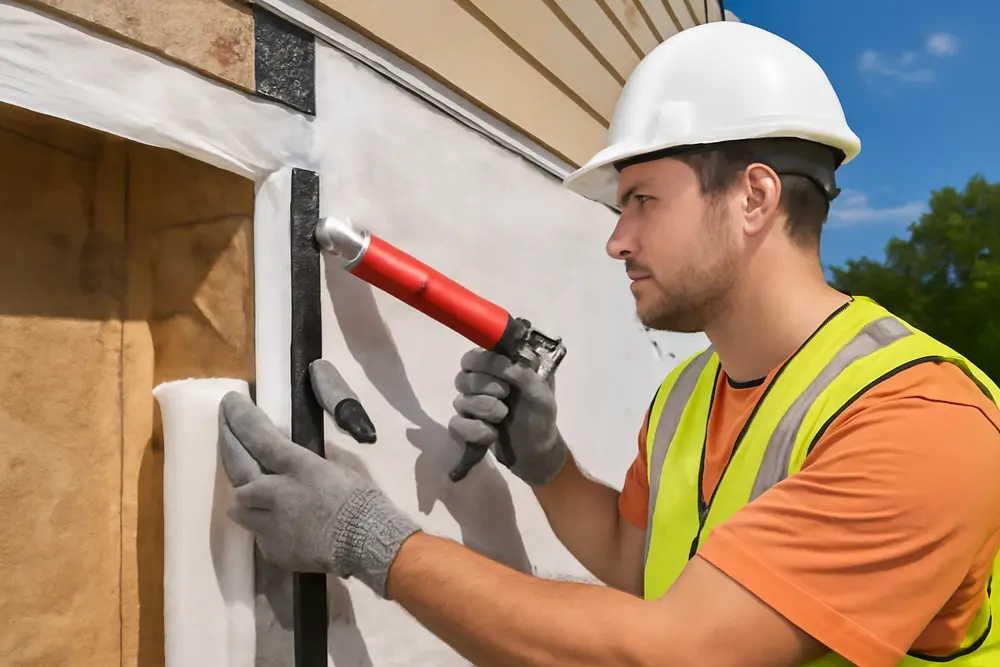
Temporary housewrap is your crash helmet for the wall until new siding shows up. Here is how to get it on quickly and correctly so the drainage plane does its job between storms.
Start at the bottom. If possible, leave a small gap to drain at the base over flashing or a drip edge. Roll the wrap horizontally and keep it taut. Overlap horizontal seams at least 6 inches with upper layers lapped over lower layers so water shingling works in your favor. At vertical seams, 6 inches of overlap is a solid target. Use cap nails or cap staples every 12 to 18 inches along studs if you can find them. Fasten more frequently at edges and in high-wind corners. Keep fasteners flat and snug, not cutting through the wrap.
Seal the seams with the manufacturer-approved tape. Press it hard for full bond, especially in cold weather. At the top edge under soffits or eaves, tuck the wrap behind trim if you can do it without tearing things apart. If roof runoff is beating on the wall, add a quick drip edge or tuck wrap under existing flashing so water does not sneak behind your new layer.
For penetrations like light fixtures, hose bibs, or vents, cut an inverted Y so you can lap the top flap over your flashing later. Tape the side and bottom cuts, not the top. You want the top to lap over any flashing you add so water pushes out, not in. If the storm left you with Swiss-cheese housewrap still clinging to the wall, cut back to solid material, then overlap a full sheet over the damaged area and tape the seams.
Flashing Stops Water
Housewrap is the blanket. Flashing is the armor. Anywhere water can change direction or sneak into a seam needs flashing that sheds water out. Self-adhered butyl or acrylic flashing tapes are perfect for patch work because they stick to sheathing and wrap, make watertight corners, and can bridge small gaps. Press them firmly with a roller for a continuous seal.
Windows And Doors
Openings are the troublemakers. If siding is gone, your factory-integrated flanges are probably exposed. You want a shingle effect at all four sides.
Start at the sill. If you can access the rough sill pan or head off standing water, do it. Add a piece of self-adhered flashing that extends up the jambs a couple inches and laps over the housewrap below so any water drips outward. Do not tape over or block manufactured weep holes or weep flanges at the bottom of the window. Those tiny paths let trapped moisture escape.
Next, flash the jambs. Run vertical strips that start at the sill flashing and end below where the head flashing will sit. Then install the head flashing so it overlaps the jamb flashing and laps under the housewrap above. Finish by cutting the housewrap above the head into a horizontal flap, slide the head flashing behind it, then tape only the diagonal cuts. This keeps water headed outward instead of letting it ride the flashing into the wall.
For exterior door thresholds, keep the drainage path. Tape the sides and head as described, then make sure the bottom does not get sealed shut. Water at thresholds should exit to the exterior, not back into the subfloor.
Corners And Transitions
Where one wall meets another or where siding meets masonry, create continuous overlap with housewrap and add a strip of self-adhered flashing that bridges the corner at least 4 to 6 inches onto each face. At band boards, belly bands, or mid-wall trims that lost siding, use flashing tape to shingle from the upper wrap to the lower wrap with the trim sandwiched or temporarily removed and refit later. If your corner trim flew off, wrap the corner tightly and add a vertical flashing strip to protect the exposed edge until the trim is replaced.
Decks, Vents, And Utilities
Deck ledgers, hose bibs, dryer vents, and cable penetrations are leak factories even in calm weather. Wrap the field first, then cut carefully around each penetration so the top flap laps over a pre-made or taped flashing boot. If you do not have boots, use self-adhered flashing to create a lower dam and side dams, leaving the top free to lap under the housewrap above. Never create an upward-facing shelf that can hold water. If ledgers are exposed, use continuous flashing along the top that laps behind housewrap above and over the face below.
Moisture Checks And Drying
Now that water is shed away, check what got wet. Wood sheathing can handle some wetting if it dries quickly. Trapped moisture turns into mold risk in as little as 24 to 48 hours. If you have a pin or pinless moisture meter, scan the exposed sheathing and interior walls opposite the damage. Thermal imaging can help spot cold, wet areas, but back it up with a meter.
If insulation is visible and saturated, pull it out to dry the cavity. Fiberglass batts can sometimes be dried and reused if they were only briefly damp and do not pick up debris, but anything visibly dirty or matted should be replaced. Cellulose that got wet needs to go. Open the interior side only if you see stains, bulges, or high readings from inside. Keep demolition surgical. The less you tear out, the less you have to rebuild, but do not trap moisture behind a fresh barrier.
Set up airflow and dehumidification. Box fans plus a 50 to 70 pint dehumidifier will handle a moderate section of wall. Aim for cross-ventilation across the open cavities if you removed interior finishes, or along the exterior surface if it is still intact. Keep interior humidity below 50 percent if possible. Check moisture daily until readings drop to near normal for your area and materials. If you smell mustiness or see fuzzy growth, stop and call a mold remediation pro. Once mold colonizes, wiping the surface is not enough because spores spread easily and can trigger health issues.
Tarps, Sheathing, And Safety
Tarps are great for roofs and short stints on walls, but they flap, pool water, and can trap moisture against sheathing. If you must tarp, pull it tight, slope it to drain, and secure edges without punching a thousand new holes in the building. For walls, temporary housewrap is almost always better than a tarp once the wind dies below dangerous levels.
If the sheathing itself is cracked or missing, sister studs and screw in a patch panel of exterior-grade sheathing so you have a flat, supported surface for the wrap and flashing. Keep fasteners flush. Use safety glasses around splintered edges and gloves with self-adhered tapes that pinch fingers easily. If you are working near service masts, meters, or buried lines, give utilities a call before drilling or screwing near them. Ladders need stable, level footing and a helper. Nobody needs a storm plus an ER visit.
Insurance Documentation That Works
Your insurance adjuster did not see the storm. Your photos and notes tell the story. Start with wide shots of each affected wall, then medium shots, then close-ups of damage. Capture torn siding, gouged sheathing, damaged wrap, bent flashing, exposed flanges, and any interior staining. Get the date and time in your phone settings or hold a notepad in the first shot of each batch. Snap the weather radar if it is still active in your area. A quick 30-second video walkaround with narration helps too.
Photograph every temporary fix step: the exposed wall, the first course of temporary housewrap, seam overlaps, cap nails, flashing details at windows, and the final sealed view. Save receipts for materials, rentals, and labor. If you pulled wet insulation or had fans running, get that on paper. When a pro like Best Option Restoration of Travis County prepares an estimate, attach it to your claim. The clearer your record, the smoother the claim review tends to be.
When To Call Pros
If a single small section of siding blew off and you are handy, a solid temporary wrap and flashing patch can hold just fine until your contractor replaces siding. Call professionals when you see large exposures, water intrusion at multiple floors, damaged windows or doors, sagging sheathing, mold spots, or any sign that electrical or plumbing got wet. In those cases, you want trained eyes, moisture mapping, and industrial drying.
Best Option Restoration of Travis County handles fast storm response, damage assessment, water extraction, structural drying, and rebuilds. We also coordinate with insurance and document the mitigation steps for you. If you need full storm damage restoration, visit our service page at Storm Damage Restoration. If you are dealing with water inside, our Water Damage Restoration process covers drying plans, daily moisture checks, and safe demolition when needed. If your walls are wet but salvageable, we use targeted drying to reduce tear-out, which is better for your budget and the planet. You can read more about sustainable cleanup at Eco-Friendly Disaster Recovery Practices.
Prevent Next Time
Storms are going to storm. You can still tip the odds in your favor. Have loose or brittle siding sections re-nailed or replaced before storm season. Ask your contractor to check that your existing drainage plane is intact under older cladding. Flashing around windows, doors, decks, and roof-to-wall intersections should be inspected and corrected where it is missing or past its prime. Clean gutters and fix downspouts so waterfalls are not blasting the siding. Check grading so water runs away from the foundation and walls. Trim trees that would toss branches at the house during a gust. Small upgrades now can keep your next storm from becoming a demolition project.
FAQ: Fast Fixes And Smart Moves
How fast can mold start after the siding blows off?
Under warm, humid conditions, mold can start to grow on wet materials in as little as 24 to 48 hours. That is why temporary housewrap and active drying are day-one tasks. Keep air moving, dehumidify, and verify with a moisture meter.
Is temporary housewrap better than a tarp on walls?
Yes. Housewrap is designed to be a water-resistive barrier that still allows drying, and it secures flat to reduce flapping and water pooling. Tarps are useful for very short-term coverage or roofs, but they can trap moisture against sheathing if left on walls.
Do I tape all four sides of a window while the siding is missing?
No. Do not block weep paths. Flash the sill first, then the jambs, then the head. Lap the housewrap over the head flashing. Leave manufacturer weep holes open so any trapped water can escape outward.
What tools do I really need for a quick drainage plane patch?
Quality WRB or temporary housewrap, cap nails or cap staples, sheathing tape matched to the wrap, self-adhered flashing tape, a roller, a utility knife, and a ladder. A moisture meter is a big help for assessment.
Will insurance reimburse me for temporary fixes?
Many policies cover reasonable emergency measures to prevent further damage. Take clear photos before and after, keep receipts, and log your time. Ask your adjuster how they want documentation submitted.
Storm-Day Checklist
- Photograph every affected wall, then cover exposed areas quickly.
- Install temporary housewrap with proper shingle laps and cap fasteners.
- Add self-adhered flashing at windows, doors, corners, and penetrations.
- Leave weeps at windows and doors unobstructed for drainage.
- Check sheathing and interior walls with a moisture meter and start drying.
- Save receipts and keep a running photo log for your insurance claim.
- Call Best Option Restoration if damage is extensive or moisture is trapped.
Want backup from a crew that fixes storm carnage every day? Best Option Restoration of Travis County is on call for emergency board-ups, water mitigation, and storm damage restoration. Call us anytime or start here: Storm Damage Restoration. The storm already had its shot. Now it is your turn.