After a hurricane or a Central Texas wind tantrum, people rush to the nearest hardware store and come home with a blue roof tarp like it’s a souvenir. We get it. Tarps are cheap, fast, and they sort of look like a solution. But if you want your home to actually stay dry while insurance drags its feet and roofers back up for weeks, you need to know the difference between roof shrink wrap and a blue roof tarp. We’re Best Option Restoration of Travis County, and we install both. We also see what happens when they’re done wrong. Here’s the straight talk on durability, wind hold, leak control, install time, safety, insurance acceptance, and the slip-ups that trigger secondary water damage or mold.
What Is Roof Shrink Wrap?
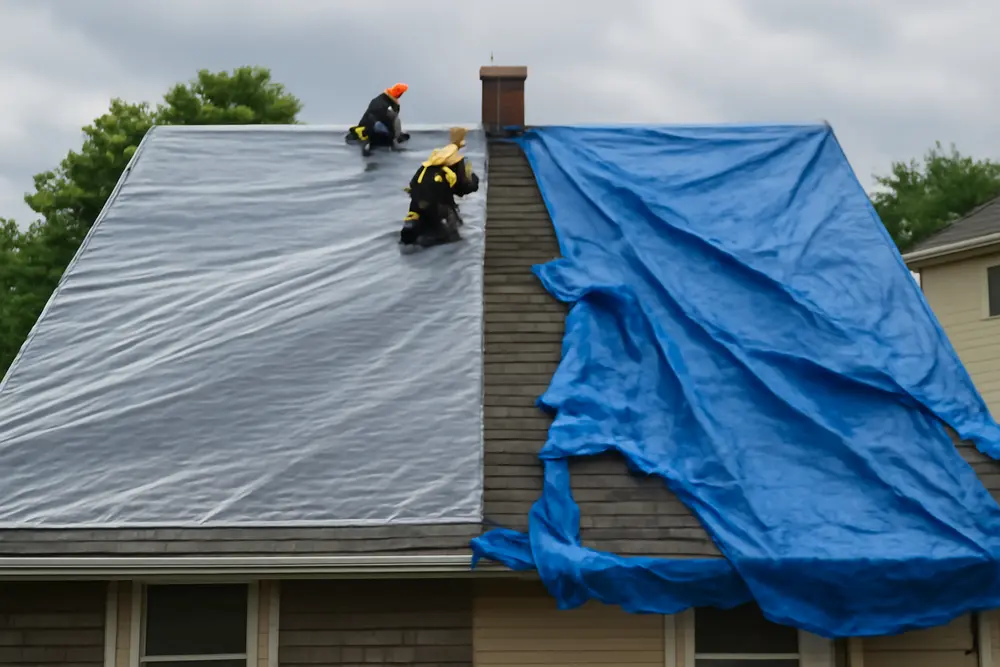
Roof shrink wrap is a heavy-duty polyethylene membrane, typically 10 to 12 mil thick, that’s UV-stabilized and designed to be heat-shrunk into a drum-tight temporary roof. Installers anchor it with battens, cleats, or engineered straps, heat-weld the seams, and pull it tight so water sheds instead of pooling. Good wrap is formulated to handle prolonged sun, expansion and contraction, and the tug-of-war that high winds create. You can cut and seal around vents or chimneys, and when it’s done right, the whole system behaves like a single waterproof skin. It’s not a permanent roof, but it’s the closest thing to one while you wait for repairs.
What Is A Blue Roof Tarp?
A blue roof tarp is the classic woven polyethylene sheet with grommets. There are heavier versions and higher-quality colors, but the big-box blue is what most people picture. Tarps are secured with ropes, nails and furring strips, sandbags, or a mix of whatever is on hand. A good tarp job covers all damaged areas with generous overlap, runs past the ridge to keep wind uplift down, and is tied in multiple directions. A bad tarp job turns into a sail, a kiddie pool, and a funnel for water. Because the material breaks down from UV and flapping stress, tarps that look OK on day one may be frayed, brittle, or leaking a month later.
Side-By-Side Comparison
| Criterion | Roof Shrink Wrap | Blue Roof Tarp |
|---|---|---|
| Durability & Lifespan | Heavy-duty 10 to 12 mil UV-stabilized film. Commonly lasts 6 to 12 months or more when professionally installed. | Woven poly that degrades faster in sun and wind. Often needs replacement within 30 to 90 days. |
| Wind Resistance & Seal | Heat-welded seams and tight anchoring create a continuous membrane with fewer failure points. | Relies on ropes and edges. Flapping and uplift are common. Tears and blow-offs happen more often. |
| Leak Prevention | Overlapped and heat-sealed coverage that sheds water. Penetrations can be cut and resealed. | Gaps at overlaps, grommet tears, and sags collect water that finds its way inside. |
| Install Time & Complexity | Skilled crew, heat tools, safety rigging, and proper fastening. More time up front, fewer call-backs. | Fast to deploy with basic tools. DIY-friendly, but often needs touch-ups or complete redo. |
| Safety | Heat equipment and roof work require trained techs. Finished wrap is tight and quiet with fewer trip hazards. | Flapping panels, ropes, and loose edges add hazards. Windy installs can be risky. |
| Insurance Acceptance | Often favored for longer waiting periods. Helps satisfy mitigation duties and reduces secondary damage risk. | Recognized as mitigation, but frequent failures can lead to disputes if interior damage continues. |
| Environmental Impact | Fewer replacements. Some wrap materials are recyclable depending on local programs. | Cheaper up front but often replaced multiple times, creating more waste. |
Durability And Wind Resistance
Central Texas sun is relentless, and wind gusts love to find the one weak spot you hoped they wouldn’t. Roof shrink wrap is built for that fight. It’s UV-stabilized, it shrinks tight so it can’t flap itself to death, and its seams are heat-welded so you’re not depending on a handful of grommets to keep the whole thing together. When anchored properly along eaves, rakes, and ridges with battens or straps, the load is spread across the structure instead of a few nail points. The result is a tighter seal that keeps working when the next storm rolls in.
Blue roof tarps can help in a pinch, but material breakdown is real. The woven poly starts to fray, UV makes it brittle, and once flapping starts, tears are next. If the tarp lifts at the ridge, the wind gets under it and the entire panel can peel back. We see this all the time after straight-line wind events. On steep or complex roofs, tarps struggle because you need so many tie points and overlaps that every extra seam becomes a possible leak or tear line.
Leak Prevention And Moisture Control
If you only care about one thing, make it this: keep water out. Roof shrink wrap is a continuous skin, which means fewer holes and gaps for water to exploit. Installers overlap sheets generously, heat-weld the seams, and tie into drip edges or temporary battens so runoff has a defined path off the roof. Vents, pipes, and satellite mounts can be cut around and sealed. Done right, it sheds water the way your roof is supposed to.
Tarps tend to pool water in low spots, and pooled water always goes looking for a pinhole, an untaped seam, or a lifted edge. If the tarp doesn’t run over the ridge and down the opposite slope, wind-driven rain can push under the top edge and channel straight into the attic. Once moisture gets in, you’re racing the mold clock. That’s when we get called later for mold clean up services and sometimes for full water damage restoration because drywall and insulation soaked up what the tarp let through.
Install Time, Cost, And Logistics
Tarps win the speed race when you just need something on the roof in the next couple of hours. If you’re dealing with small localized damage and you have a handy neighbor with a ladder, a well-secured blue roof tarp can be a decent stopgap. Materials are widely available, and the upfront cost is usually lower.
Shrink wrap takes a trained crew, heat tools, and more time. You’re paying for better materials and for pro installation that puts the seams, anchors, and overlaps exactly where they need to be. In Travis County, we install a lot of shrink wrap after big hail or hurricane remnants when repair timelines stretch into months. That extra investment usually saves at least one re-tarp trip, sometimes more, along with the interior repairs you avoid by keeping the building dry the first time.
Safety On The Roof
No one should be skittering across wet shingles during a wind advisory. Roof work requires fall protection, stable ladder setup, and a crew that knows how to move on steep or damaged decking. Shrink-wrap installation adds heat tools into the mix, which is one more reason it’s not a DIY project. The upside is a finished cover that’s tight, quiet, and not trying to trip you with loose ropes.
Tarps can be installed by homeowners, but windy installs are dangerous. A six-hundred-square-foot blue sail is not your friend. Flapping edges can smack hands off ladders, ropes become hazards, and nail-through-fascia shortcuts create more problems later. We regularly rework DIY tarps because the hazards of rushing it outweighed the quick fix.
Will Insurance Approve It?
Most policies require you to mitigate further damage after a loss. Both roof shrink wrap and blue roof tarps can satisfy that duty if they’re installed correctly and quickly. Insurers in Texas recognize emergency cover as part of reasonable steps to protect the property. Where we see claims go sideways is when a temporary cover fails and interior damage keeps happening for days or weeks with no documentation of maintenance.
Because shrink wrap is more durable and sealed, adjusters often view it as a better solution for long wait times. If you’re staring at a three-month repair queue, a wrap that holds for the duration means fewer surprises. Whichever route you choose, document everything. We photograph damage before covering, show the installation details, and leave you with simple care notes. That paper trail matters later if anyone questions how moisture got inside or when mold began.
Mistakes That Lead To Damage Or Mold
We see the same errors again and again after storms. Skipping the ridge is a big one. If you only cover the damaged slope and stop short of the ridge, water and wind can drive right under the top edge. Another frequent miss is using thin, non-UV materials that fail fast. A tarp that looks fine on day 10 might be brittle on day 30, which is exactly when the next thunderstorm shows up to test it.
On shrink wrap, seam work matters. Overlaps have to be dry and heated evenly or they won’t fuse right, and a cold lap is just a disguised seam waiting to separate. Fastening is another make-or-break detail. Battens that are too short, spacing that is too wide, or anchors driven only into rotten decking are all invitations for the next gust to lift a corner. Vent handling is a quiet culprit too. You can’t just bury a vent and hope for the best. If you trap moisture by blocking ventilation, you’re encouraging mold inside the attic while the outside looks perfect.
Finally, timing and documentation count. Installing during heavy wind or rain produces bubbles, gaps, and weak bonds. Those imperfections become leak paths. If you cover before getting photos or a quick video of the roof condition, you lose critical evidence that adjusters and contractors need to plan repairs and evaluate secondary damage.
When A Blue Tarp Makes Sense
There’s still a place for the classic blue roof tarp. If your damage is small, repairs are scheduled within a week or two, and you need something on the roof now, a well-secured tarp may be all you need. Tarps are also useful as an initial same-day stopgap while you line up a professional shrink wrap. The key is proper overlap over the ridge, tight anchoring with furring strips, and frequent checks after windy nights. If you find sagging, flapping, or new drips inside, it’s time to upgrade.
How We Handle Emergency Dry-Ins
At Best Option Restoration, we match the cover to the situation. For homes expecting long insurance or roofer delays, we recommend roof shrink wrap and install it with the same attention we bring to full restoration projects. That means fall protection, clean and dry overlaps, correct heat settings, battens anchored into sound framing, and sealed penetrations. We also meter moisture inside the structure so we’re not trapping vapor, set temporary ventilation if needed, and give you guidance on inspections after high wind or hail.
When a tarp is the right call, we do it by the book. We run over the ridge, secure with continuous furring strips instead of a few lonely nails, and stage water runoffs so nothing pools. If you’re already seeing interior moisture issues, our team can handle the drying and antimicrobial steps right away, including water damage restoration and mold remediation if necessary. We work across Travis County and surrounding areas, so we know the roof pitches, the common materials, and how the weather here likes to throw curveballs.
FAQs
How long does roof shrink wrap last?
With quality 10 to 12 mil UV-stabilized film and professional installation, you can expect 6 to 12 months or more of service. It’s designed to bridge the gap until permanent repairs are complete.
How long can I count on a blue roof tarp?
Plan for 30 to 90 days, depending on sun exposure and wind. If you see fraying, brittleness, or flapping, replace it or step up to shrink wrap.
Will my insurance cover shrink wrap?
Insurers generally recognize both tarps and shrink wrap as mitigation. Coverage varies by policy and loss details, so check with your carrier. We provide photos and documentation to support the claim.
Is shrink wrap safe for my shingles?
Yes when installed correctly. We avoid aggressive adhesives on finished surfaces, anchor into sound framing, and remove wrap without tearing at granules or flashing.
Can I DIY shrink wrap?
It’s not a good idea. You’re working at height with heat tools, and weak seams or bad anchoring defeat the purpose. Hire a trained crew to get the seal you’re paying for.
What if rain is in the forecast today?
A tarp can go on quickly as a stopgap. We often tarp same day, then return for a shrink wrap when conditions allow for proper dry and tight installation.
Ready For An Emergency Dry-In?
If your roof is open to the sky, every hour matters. Best Option Restoration of Travis County installs both roof shrink wrap and blue roof tarp systems, and we’ll tell you straight which one makes sense for your home, your timeline, and your budget. We can also handle the inside of the mess if water already got in. Reach out, and let’s get your roof tight, your interior dry, and your claim documented the right way.