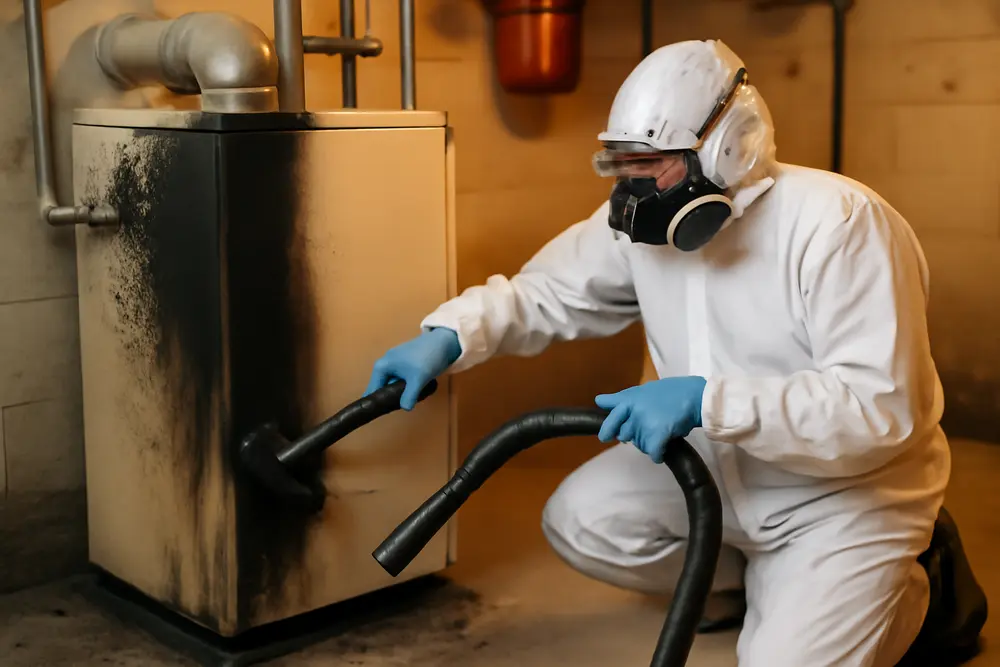

If your oil furnace just coughed like a dragon and your house now looks like it auditioned for a gritty detective show, you probably met the infamous puffback. In seconds, a delayed-ignition burp shoots oily soot through the flue, out of registers, and across walls, ceilings, carpets, cabinets, and every sad throw pillow you own. It is sticky. It is smelly. It bonds to surfaces like it pays rent. The good news: you can stop the spread, avoid rookie mistakes that set stains in stone, and get it cleaned the right way. Here’s how Best Option Restoration of Travis County tackles oil furnace puffback so you can breathe again without the eau de diesel vibe.
Shut It Down Without Making It Worse
First things first. You need to stop more soot from firing off and protect yourself while you do it. Puffbacks are often caused by unburned oil that collects when ignition fails. Hitting the reset button again and again just floods the chamber with more fuel and sets the stage for a bigger blast of soot. One press is a test. Two is an invitation to regret.
Move fast, but do it safely:
- Turn the thermostat to Off so the furnace stops calling for heat.
- Cut power at the furnace emergency switch and at the breaker panel.
- If you can access it safely, close the oil supply valve to the burner.
- Skip repeat resets. If the burner will not run after a single reset, it needs service, not optimism.
- Wear basic PPE if you’re near the mess. N95 or P100 respirator, gloves, and goggles keep soot out of your lungs, eyes, and skin.
Once the system is dead quiet, leave it alone. The HVAC tech and the restoration team will each have their lane. Your job now is to keep the soot from spreading and turning a bad day into a full-house makeover.
Contain The Soot Before It Travels
Oily soot is the world champion of hitchhiking. It moves on air currents, on your shoes, on a damp rag that seemed like a good idea at the time. Your mission is containment. Start by keeping the blower off. Do not run the HVAC fan to try to air things out. That turns your ductwork into a soot sprinkler system.
Close doors to affected rooms to limit drift. Lightly tape plastic or painter’s poly over large return vents so the system cannot pull soot through the house. If the system accidentally cycles or you need some airflow later, place cheesecloth or a sacrificial filter media over supply vents to catch particulates. Lay down disposable walk-off paths from the worst areas to the nearest exit so every step does not print black smudges. Bag and remove clothing or porous items you have to move, rather than dragging them around uncovered.
A gentle air purifier with a HEPA filter can help in rooms that were not hit as hard, but do not put anything that moves a lot of air in the main blast zone. The goal is to trap, not launch.
Skip These DIY Soot Mistakes
We get it. You want it gone yesterday. But some fast moves make permanent damage. Here are the bear traps to walk around.
Do not wipe oily soot with a damp cloth. Moisture emulsifies the residue just enough to drive it into paint, drywall paper, and fabric. That creates set-in stains that need repainting or replacement. Start dry or do not start at all.
Do not use your household vacuum unless it has a sealed HEPA system. Regular vacuums spit ultrafine soot out the exhaust and redecorate the room in a classy charcoal haze. Even with HEPA, you still need the right attachments and technique to avoid streaks and redeposition.
Do not test random cleaners on the middle of a wall or the center of a sofa cushion. Petroleum soot can react with solvents and fragrances. If a pro instructs you to pretest, always start in a hidden corner with the exact product and dwell time you intend to use. Better yet, let a pro do the testing and product matching by material type and stain profile.
How Pros Remove Oily Soot
Professional cleanup is not just elbow grease. It is a staged process built to avoid smearing, cross-contamination, and recurring odor. Here is how the Best Option Restoration team approaches oil furnace puffback cleanup.
We begin with a written scope and a walkthrough to map the soot plume, identify soot density levels, and note high-touch items and sensitive finishes. Then we set up containment with plastic barriers and negative air where needed, so cleaned rooms stay clean.
Dry removal comes first. Think soot-lifting, not scrubbing. On painted walls, sealed wood, and some plastics, we use chemical sponges that lift residue without wetting. On textured ceilings and trim profiles, we pair those with soft-brush HEPA vacuuming. The intention is to remove the loose, powdery fraction and as much of the oily residue as possible before liquids ever hit the surface.
Targeted wet cleaning follows. The chemistry matters. Oil-based soot needs surfactant-heavy, oil-splitting detergents that break the bond and suspend soils so they can be wiped away without smears. We work top-to-bottom to prevent streaks and redeposition, refreshing wipes and solution often. On glossy paints, cabinets, and appliances, we adjust pH and dwell times to protect finishes. On unfinished or highly porous surfaces, we may combine gentle agitation with hot detergent extraction or move to sealing if staining is irreversible.
Detail cleaning wraps the structural phase. Light switches, outlet covers, cabinet pulls, door tops, window sashes, baseboard ledges, and every horizontal surface get attention. Soot loves ledges. A quick glance misses them. A week later, they reprint grime on clean hands and clothes. We do not give them the chance.
Thermal Fogging Deodorization And More
You can remove 99 percent of visible soot and still smell it. That last 1 percent hides in pores, cavities, and fibers. Deodorization is the part that convinces your nose the nightmare is over. Thermal fogging deodorization is a go-to for puffbacks because it mirrors the way smoke and soot dispersed in the first place. A thermal fogger heats a specialized deodorizing formulation until it becomes an ultra-fine fog that behaves like smoke. It flows into cracks, behind trim, into voids, and through textiles, neutralizing odor at a molecular level instead of trying to cover it.
We choose the deodorizing agent based on the contamination profile and the materials in the home. The fog is applied under controlled conditions with ventilation plans and re-entry times defined so it does the job without guesswork. Thermal fogging is powerful, but it is not the only tool in the kit. Here is how it stacks up next to other options.
| Method | Works Best For | Notes |
|---|---|---|
| Thermal Fogging | Deep, oily soot odors in voids and porous materials | Heated fog mimics smoke travel for thorough penetration |
| ULV Cold Fogging | Light to moderate odor control in open areas | Great for broad coverage with less heat; may not reach as deep |
| Ozone | Unoccupied spaces with severe residual odors | Strong oxidizer; space must be cleared and ventilated before re-entry |
| Hydroxyl Generators | Occupied spaces needing continuous odor reduction | Gentler option for long-duration treatment while work continues |
The best results often come from a sequence. After physical removal and targeted cleaning, we may run hydroxyls during the work phase, then finish with thermal fogging or a cold fog pass where needed. If a room has heavy soot embedded in bare drywall or raw wood, sealing with an odor-blocking primer is the final lock.
HVAC, Contents, And Finishing Touches
Puffback soot does not respect boundaries. If registers are dirty, the inside of the duct runs and the furnace cabinet probably need work too. Our team coordinates with HVAC pros for safe, methodical duct cleaning. That usually includes removing and cleaning registers, vacuuming and brushing duct interiors with HEPA capture, and cleaning accessible sections of the air handler or furnace cabinet. We also replace filters throughout the system, and in heavy events we often stage multiple filter changes during the project. The goal is simple: no dirty air highway left behind.
Contents restoration takes strategy and patience. Textiles like drapes, clothing, and soft goods often respond to professional laundering with oil-targeted detergents and additive boosters. Upholstered furniture, area rugs, and mattresses may need HEPA vacuuming, solvent-safe spotters, and hot-water or solvent extraction depending on fabric type. Hard contents like electronics get a careful inspection first. Fine soot can short-circuit boards, so we do not power devices until they are inspected and cleaned. Dishes, cookware, and small appliances go through multi-stage cleaning with degreasers and rinses, often followed by deodorization in a controlled environment.
Walls and ceilings are where the finishing decisions matter most. After soil removal, we evaluate staining and porosity. If stains or odor shadows remain, an odor-sealing primer designed for smoke is applied before repainting. Skipping the sealer and painting straight over soot-stressed surfaces is how you get ghosting and bleed-through later. We also revisit trim, windows, blinds, and lighting fixtures after painting, because micro-particles can settle while you are not looking.
Can You Prevent A Puffback?
You cannot make combustion risk zero, but you can make puffbacks a lot less likely. Regular service is not a suggestion for oil burners. It is the line between a furnace that purrs and a furnace that pants soot. Schedule seasonal service to clean the burner assembly, swap the nozzle and oil filter, verify ignition and flame sensors, and confirm that the draft is correct. If your tech finds wet oil in the chamber, unburned fuel in the flue, or carbon buildup, those are early warning lights.
Only press the reset button once if the burner trips. If it does not start and run smoothly, call your service company. Repeated resets pool fuel and can lead to a dirty mini blast the next time it lights. Keep the area around the furnace clean and free of stored items, especially chemicals or aerosols. Make sure the combustion air path is not choked by dust, pet hair, or a door that was added after the furnace was installed. And if you smell oil or see soot streaks near registers, do not ignore them. Small signs often show up days before a bigger event.
How Best Option Restoration Handles Insurance
Puffbacks are sudden and accidental, which means many homeowner policies cover the cleanup. Documentation is half the job. Our team photographs affected rooms, itemizes contents that need cleaning, creates a step-by-step scope, and keeps moisture and particulate readings where relevant. We speak the adjuster’s language and provide the right paperwork so the claim does not stall over missing details. If something is not cleanable to a pre-loss condition, we document the reason and the recommended replacement path.
When Should You Call A Pro?
Here is the rule of thumb. If you can write your name in soot across more than one wall, you are out of DIY country. Oily soot needs the right sequence, chemistry, and containment. Without that, you chase smears from room to room and breathe particles your lungs do not want. Best Option Restoration brings HEPA systems, specialty detergents, odor control tech like thermal fogging deodorization, and a cleaning crew that knows exactly how to keep clean surfaces clean while tackling the worst zones first.
If you are in or near Travis County and your furnace acted up, call Best Option Restoration of Travis County. We are on 24-7 standby for puffback emergencies, and yes, we show up ready to work. Quick stabilization saves surfaces and cuts the time your home smells like a truck stop.
Pro Tips You Can Use Right Now
Until help arrives, a few simple moves can save hours later. Park a box of baking soda or activated charcoal in small closed spaces that got the odor, like closets and cabinets, to slow odor transfer into clothing. Keep pets and kids out of the affected areas so paw prints and playtime do not grind soot deeper into fibers. If you must wash your hands after touching soot, use a degreasing soap instead of scented liquid hand soap that can smear it further. And resist the urge to test a magic cleaner you saw online. Puffback soot is not a normal mess, and it punishes guesswork.
FAQ: Puffback Cleanup
What Causes An Oil Furnace Puffback?
Usually it is unburned oil that accumulates because ignition fails or the burner is dirty. When it finally lights, the mini explosion carries soot and vapor out through the unit and into the ductwork or living space. Issues with nozzles, electrodes, draft, or fuel quality can all contribute.
Is The Soot Dangerous?
Oily soot contains fine particulates and combustion byproducts that are not friendly to lungs, eyes, or skin. Limit exposure, wear a respirator if you are near it, and let trained techs handle removal. For sensitive people, kids, and pets, keep them in clean rooms or offsite until the heavy work is done.
Can I Just Repaint Instead Of Cleaning?
Painting over soot without proper cleaning and sealing is a fast way to get stains and odor bleed-through. Clean first, then apply an odor-blocking primer, then repaint. Skipping steps costs more later.
Do I Need Duct Cleaning After A Puffback?
If registers or the furnace cabinet have soot, the duct interiors likely do too. A professional duct cleaning with proper capture, followed by filter changes, prevents recontamination of freshly cleaned rooms.
How Long Does Thermal Fogging Smell Last?
The deodorizing scent typically dissipates within hours to a day after ventilation. What stays gone is the smoke odor it neutralized. Your crew will set safe re-entry times and ventilation steps so you are not guessing.
What Should I Do With Sooty Clothes?
Bag them and keep them separate from clean items. Many fabrics respond well to professional laundering with oil-targeted detergents and boosters. Avoid tossing them straight into a residential washer. You risk transferring odor and residue to the machine and other laundry.
Ready For A Real Cleanup?
If you are staring at sticky soot and a reset button that is not your friend, you are exactly who we help. Best Option Restoration brings trained techs, HEPA filtration, oil-cutting chemistry, and odor-busting tools like thermal fogging deodorization. We shut down the spread, clean the structure and contents, treat the smell at its source, and get your home back to normal the right way. Call Best Option Restoration of Travis County any time. We handle the mess so you do not have to wear it.