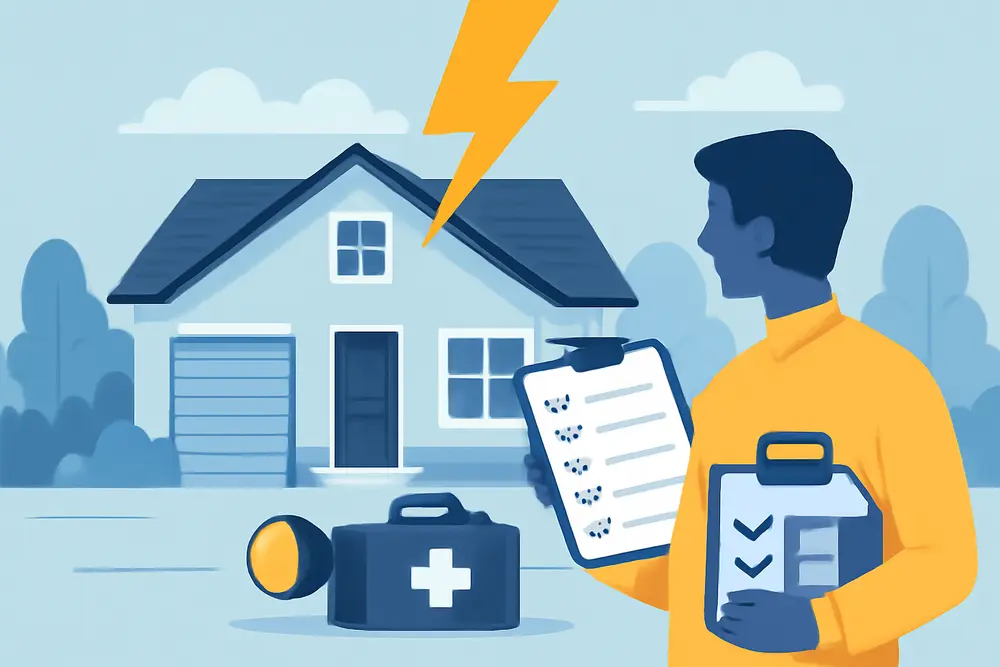

Lightning just gave your house a tens-of-thousands-of-amps tattoo. Even if nothing is smoldering, your wiring, roof, HVAC, and appliances just went through a trial by voltage. This lightning strike recovery guide walks you through staying safe, re-energizing the right way, where to spot sneaky damage, what to document for insurance, and who to call before small problems torch your budget. We keep it straight, a little spicy, and very practical so you can get the lights back on without gambling with hidden power surge damage.
Safety First, Power Second
If you suspect the strike was close or direct, treat your home like a live wire until it proves otherwise. Lightning can backfeed through service lines, fry breakers without tripping them, carbon-track inside walls, and leave energized surprises where you least expect them. Your job now is to pause, inspect, and only then power back up.
If you smell burning, see charring, or hear crackling, stay out and call the fire department. If it looks safe to enter, keep your hands off large appliances, HVAC, water heater, and anything with a motor or circuit board. Head to the main panel and turn the main breaker off if you suspect damage. Do not rely on a light switch or a single tripped breaker to tell you everything is fine.
Scan the electrical service outside. If the meter base is cracked, the mast is bent, service lines are drooping or arcing, or the weatherhead looks scorched, call your utility first and keep the main off. A cheap outlet tester or a non-contact voltage tester can flag obvious issues, but do not mistake a few happy green lights for a clean bill of health. Hidden arc paths and insulation damage are common after a strike, which is why electricians use insulation resistance testing and megohm meters to validate circuits under stress. For a solid rundown of how pros test wiring after lightning, see this guide on insulation resistance and megohm testing.
Appliances are frequent casualties after a surge. Before you plug things back in, skim our quick hitter on what can be saved vs what is a lost cause: Home Appliance Disaster Recovery: What to Save or Replace.
Hidden Damage To Hunt Down
Lightning loves the path of least resistance, which usually means metal and moisture. It can flash across your roof, jump through nails and flashing, travel along gutters and downspouts, and hop into wiring, HVAC control boards, and plumbing. You want to look for both impact and pathway damage.
Roof And Structure
Start outside with eyes up. Look for missing or popped shingles, pockmarks in asphalt shingles, and punctures around ridge vents, vents stacks, and any metal flashing. Chimney caps and metal vent hoods can show pinpoint impact marks, small craters, or a dusting of melted bead-like metal. Gutters may have scorch marks at seams or at corners where lightning jumped. If you see fractures in masonry, hairline cracks near roof penetrations, or water stains on sheathing in the attic, you likely had a conductive path or shock damage that needs pro-grade repair.
This quick primer on what a direct hit can do to roof components is worth a skim: What Happens When Lightning Hits Your Home. Spoiler: it is not just a few singed shingles.
Electrical System
Inside, start with your panel. Look for discolored or heat-marked breakers, a burned smell, or any sign of melting near the bus bars. Randomly tripped breakers after a strike are a red flag. Move to outlets and switches. Browned plastic, sooty streaks on the wall, or a sharp acrid odor means a conductor overheated. Check GFCI and AFCI devices and note any that refuse to reset.
Even when everything looks pristine, surge energy can punch micro-damage through wire insulation and windings. That is why pros go beyond a continuity test. They use insulation resistance testing with a megohmmeter to stress the circuit at a higher, controlled voltage to see if the insulation leaks current. It is one of the best ways to catch damage before a re-energized circuit arcs inside a wall. Here is a plain-English walk through of that process: How To Test Wiring After A Lightning Strike.
HVAC And Plumbing
Outdoor condensers and heat pumps sit front row for surge damage. The control board, compressor windings, contactor, and fan motor can all take a hit even if the cabinet looks brand new. Indoor air handlers and smart thermostats are also fair game. Do not force-start your system. If it hums, buzzes, or trips a breaker, stop and get an HVAC tech to test windings, capacitors, and boards. Industry claims data consistently points to HVAC electronics as frequent losses after lightning and surges. If you are curious about how adjusters look at these, check this resource: Lightning And Surge Claims.
Plumbing runs can act as conductors too. Where water lines bond to electrical grounding, surge energy can travel. Look for pinhole leaks on copper, cracked plastic fittings, and soot near metal-to-metal contact points. Water heaters with electronic ignition or smart controls deserve a careful once-over before you heat anything. Gas lines should be inspected for bonding and any lightning-related arc damage, especially near appliances.
Other Systems Worth Checking
Surge energy is equal-opportunity destructive. Test smoke detectors, carbon monoxide alarms, security panels, garage door openers, cable and satellite lines, and any low-voltage wiring like doorbells and landscape lighting. Communication lines often give lightning a backstage pass into your networking gear and smart-home hubs. If your router, modem, or switch lights are dead or weirdly blinking, do not keep resetting it. Replace or have it tested so you do not feed damage forward into a re-energized system.
What To Capture For Insurance
Your insurer loves evidence almost as much as adjusters love a clear paper trail. Start before cleanup. Photograph everything from wide to tight angles, indoors and out, including panel interiors, outlet covers, roof penetrations, and every appliance with a screen or circuit board. Video works great when you narrate what you are seeing, the room, the circuit, and any sounds like buzzing or arcing.
Save the broken bits. Melted outlet covers, charred breakers, fried surge strips, and scorched roofing are physical proof. Jot down the date and time of the strike and grab a quick weather report or lightning map screenshot that shows the storm in your area. List the make, model, and approximate age of affected appliances and HVAC equipment. If you call a licensed electrician, HVAC tech, roofer, or restoration team, keep their reports and estimates. These become your claim anchors.
For general info on what homeowners policies often cover with surges, Progressive has a simple explainer: Are Power Surges Covered. Policies vary, but many include lightning and resulting power surge damage, especially when you document it well and show professional findings. If roof openings let in rain, that is a water problem on top of an electrical one, which is why we keep this service ready: Water Damage Restoration. And for the appliance side of the claim, circle back to this quick reference on what is worth saving: Home Appliance Disaster Recovery.
Re-Energizing Without Regrets
Once you have photographed and logged the damage, it is time for a cautious power-up. Best practice is to let a licensed electrician look over the service, panel, and a sampling of branch circuits first. If they green-light a controlled restart, bring your home back online in stages instead of flipping everything at once.
Start with the main on and all individual breakers off. Turn on one small general-lighting circuit, then walk the rooms it feeds. Listen for buzzing at outlets, sniff for that hot-electronics smell, and put a hand near the panel to feel for any unusual warmth. If that circuit passes muster, add the next. Leave heavy hitters like HVAC, water heater, range, and laundry for last. If a breaker instantly trips or you hear arcing, stop and call your electrician. Do not keep flipping a misbehaving breaker. Breakers get weak and arcs get stronger.
Keep sensitive electronics unplugged until surge protection is addressed. That includes TVs, computers, networking gear, game consoles, and anything with the word smart in its name. When you get to HVAC and water heating, restore power and controls first, then start the equipment and listen. A steady start is what you want. If you hear humming, chattering contactors, fan wobble, or metal-on-metal, shut it down and call an HVAC tech. For gas equipment, confirm no gas odor, check that vents are clear, and relight only after a safety check if your model requires it.
Test GFCI and AFCI devices around the home. Some will trip after a strike and refuse to reset until replaced. Use a plug-in tester to confirm correct polarity and grounding. A simple infrared thermometer can help you compare outlet and breaker temperatures before and after you energize circuits. Anything that climbs in temperature fast deserves attention.
Who To Call And When
If you see damage to poles, transformers, neighborhood lines, or your service drop, call your utility provider first. They own the gear up to the meter and need to clear external faults before you do anything inside.
Bring in a certified electrician to evaluate the panel, bond and grounding system, branch circuits, and surge protection options. If the lightning strike cooked HVAC electronics or you suspect compressor damage, get an HVAC specialist to test capacitors, windings, and boards before you try repeated starts. Roofers and restoration pros come next if you found punctures, lifted shingles, attic scorching, or water intrusion that needs tarping and dry-out.
If your claim is large or complicated, consider a public adjuster early. Experienced claim pros can help document complex surge paths and equipment failures. Here is a good primer on why that can help in tough surge claims: Electrical Surge Damage Claims.
When you want a single team that knows how electrical, roofing, water, and contents all mesh after a strike, call Best Option Restoration of Travis County. We coordinate with electricians, HVAC techs, and roofers, handle dry-outs and deodorization if needed, and help you gather the right evidence for your insurer. Our 24-7 line is here: Contact Best Option Restoration.
Smart Prevention That Works
You can not bully lightning, but you can steer what it does to your house. A whole-home surge protective device at the service panel helps clamp high energy so less gets to your circuits. Add quality point-of-use protectors for sensitive gear on top of that. The combo approach matters because some surges originate inside your home, and some come from outside.
Ask a licensed electrician to evaluate your grounding and bonding. A properly bonded system gives surge energy a safer exit route. If your home is in a high-strike area or is the tall kid on the block, talk with a lightning protection contractor about air terminals and bonding down conductors to ground rods. Done right, that system aims to intercept and disperse energy before it chews through your home.
Maintenance helps too. Trim trees away from service lines and the roof, check roof flashing annually, keep gutters clear, and schedule HVAC service so a surge-damaged capacitor or weak winding gets found fast. Label your panel circuits clearly so a controlled restart is easy when you need it most. If your panel is older or short on modern protections, ask about adding AFCI and GFCI where code requires or where it simply makes sense.
DIY Or Pro? Use This Cheat Sheet
| Task | Homeowner Can Do | Call A Pro |
|---|---|---|
| Initial visual scan for scorch marks, smells, odd sounds | Yes | No |
| Photographing and documenting damage for insurance | Yes | No |
| Turning main breaker off or on for a staged restart | Yes, if no external service damage | Yes, if damage is suspected |
| Testing outlets with a basic plug-in tester | Yes | No |
| Opening panels, insulation resistance testing, wiring repairs | No | Electrician |
| Evaluating compressor windings, control boards, refrigerant | No | HVAC Technician |
| Roof tarping, shingle replacement, chimney cap repairs | No | Roofer or Restoration Pro |
| Water intrusion dry-out, attic deodorization, contents care | No | Best Option Restoration |
Quick FAQ
How Do I Know If The Strike Was Direct?
Direct strikes often leave obvious clues like blown shingles, scorched flashing, spalled brick, soot trails near roof penetrations, or a loud crack with immediate electronics failures. Indirect strikes still cause serious power surge damage through utility lines or nearby ground hits. Either way, treat it the same: inspect, document, test, and restart slowly.
Why Did Some Breakers Trip And Others Did Not?
Surge energy does not behave politely along neat circuit lines. It may punch through electronics that are off, hop along neutrals and grounds, and never exceed the instant trip threshold of certain breakers. Breakers can also be damaged and fail to operate correctly. That is why a healthy-looking panel can still need pro testing.
Can I Just Replace A Fried GFCI And Call It Good?
Replace it if it failed, but do not assume that fixes upstream damage. GFCIs and AFCIs are canaries in the coal mine. If one died, you need to check the circuit it protects, including wire insulation and connections.
Will Insurance Cover My Electronics And HVAC?
Many homeowners policies cover lightning and resulting surges, subject to your policy terms and deductibles. Document thoroughly, keep damaged parts, and collect pro reports. Here is a general explainer from Progressive on surge coverage: Power Surges And Insurance.
Do I Need A Whole-Home Surge Protector If I Already Use Power Strips?
Yes. Power strips are the backup singers, not the headliner. The heavy lifting starts at the service panel with a whole-home device. Pair them for layered protection.
Need Help Now?
If lightning turned your weekend plans into panel peeking and outlet sniffing, tag us in. Best Option Restoration handles storm-driven water intrusion, smoke and odor control when things flash over, and the messy middle where electrical, roofing, HVAC, and contents all intersect. We team up with licensed electricians and HVAC techs to document damage that insurers actually accept, and we stabilize your property fast so small issues do not snowball. See our restoration services at Best Option Restoration and hit our 24-7 line when you are ready: Contact Us. Lightning already brought the drama. We will bring the fix.