
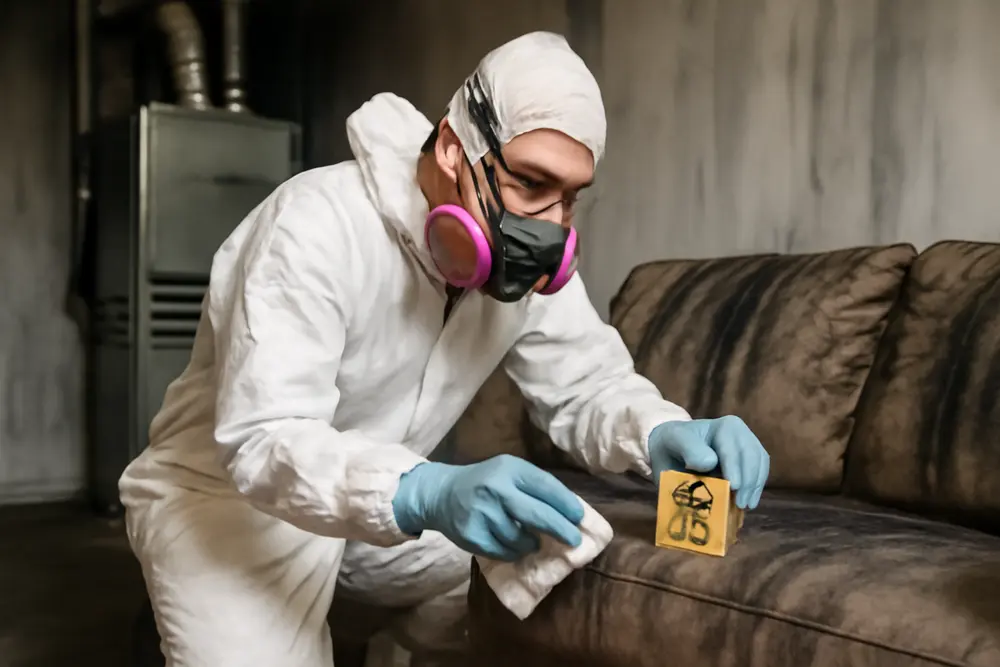

If your oil furnace just burped a cloud of greasy smoke like a dragon with the flu, you are staring at a puff back. That oily soot loves to fingerprint everything you own and then form spooky spiderweb lookalikes called soot tagging. Quick furnace puff back cleanup is the difference between a contained mess and a whole-house makeover you did not ask for. Here is how to spot the problem fast, contain it before your HVAC spreads it, clean surfaces without making a bigger mess, suit up safely, and know when to tag in Best Option Restoration.
How To Recognize A Puff Back
Puff backs are usually tied to oil-fired equipment that fails to ignite cleanly. Unburned fuel or vapors build up, then ignite all at once with a dirty little boom that sends fine, sticky soot across the room and often the entire home. You will know it by a few calling cards:
Black smudge marks around supply registers, return grills, and the furnace room are classic. The odor is a dead giveaway too. Think smoky and slightly sweet with a diesel vibe. You might have noticed a delay or rumble at startup before it happened, or you now see lazy yellow or orange flame if the burner attempts to relight. Unlike regular dust, puff back soot feels oily. Rub it lightly and it smears fast. You might also see dark chains or web-like streaks at ceiling corners, along nail pops, or around cold spots. That is soot tagging, and it happens when warm, sticky particles magnetize to cooler surfaces and edges. Spoiler: those are not spider webs and the spiders are insulted you thought so.
Why Containing Soot Matters
Oily soot is a champion hitchhiker. Your ducts, blower cabinet, and every register can become soot superhighways within minutes. Once it circulates, it settles into carpets, upholstery, clothing, paper goods, and electronics. On painted walls and cabinetry, it imprints like a bad tattoo and resists typical cleaners. Electronics are especially sensitive because acidic by-products and fine particulates corrode components when power is applied. Your lungs are not fans either. Puff back residues carry fine particles, PAHs, and VOCs that irritate airways and can trigger headaches, asthma, and allergies. Translation: stop the spread first, then think about cleaning.
Smell Oil And See Soot… Now What?
Move fast, but do not get reckless. Turn the thermostat to off and shut the furnace down at the service switch. If the unit is still misfiring, call your HVAC technician right away. Do not run the blower or any whole-house fans. Keep traffic to a minimum so you do not track soot to clean rooms. Crack a window near the source for light ventilation, but skip box fans and do not open windows all over the house or you will suck soot into other spaces. If you can do it safely, tape off the mechanical room door and cover supply and return grills in affected rooms with painter’s tape and plastic to pause cross-contamination. Park pets in a clean room and keep kids out of the affected zones. Resist the urge to start wiping. Water and typical all-purpose cleaners smear oily soot and can etch finishes. Bag obviously contaminated textiles and set them aside for professional cleaning so you do not set stains in your washing machine.
Non-Smear Cleaning Methods
Puff back cleanup rewards patience. You want to lift soot, not grind it in. Work clean to dirty, high to low, and dry to wet. Here is the playbook the pros use for surfaces:
Start With Dry Removal
Use a HEPA vacuum with a soft brush attachment to gently remove loose residue without gouging paint or texture. Household vacuums without HEPA filtration will aerosolize soot and spread contamination, so skip them. Next, use dry cleaning sponges, sometimes called chemical sponges. Work in straight, single passes without scrubbing, flipping or cutting the sponge face as it loads. Aggressive pressure drives soot into the substrate and makes staining worse.
Target Oily Residue With The Right Solvent
After the dry pass, there is usually a stubborn film that dry sponges cannot lift. That is where solvent-based soot removers and degreasers come in. Always test a small, hidden section first. For painted drywall, many restoration-grade soot removers will emulsify the film with a wipe then a neutral rinse. On semi-gloss or gloss paint, you have more forgiveness; on flat paint, expect more ghosting and be conservative. For finished wood cabinetry and trim, choose a solvent that will not dull the finish and keep your dwell time short. For stone and tile, avoid harsh acid or high-alkaline cleaners that can etch or haze the surface. Lift, wipe, and follow with a mild, pH-balanced rinse only after the residue releases. Never start with water alone. That turns oily soot into a gray paste that stains and can telegraph through future paint.
Avoid Etching And Smears On Delicate Surfaces
Plastics, acrylics, and certain laminates can craze or haze if you hit them with the wrong chemistry. Glass can look streaky if you smear soot across it. Again, dry removal first, then a solvent cleaner designed for soot, then a glass-specific follow-up if needed. For stainless steel, wipe with the grain, not across it, and skip abrasive pads that mar the finish. On ceilings with texture, keep vacuum pressure low and use light sponge passes to avoid tearing the texture.
Fabrics, Carpets, And Contents
Textiles are soot magnets. Do not launder or spot clean preemptively. Heat and water set oily residues. Bag clothing, drapes, and linens for professional textile restoration. Carpets and upholstery respond best to HEPA vacuuming with tool agitation followed by specialized cleaning methods that break down oil without pushing it deeper. For books, papers, and art, avoid DIY experiments. These materials are porous and easily stained. For electronics, do not power anything on. Oily soot and energized circuits are a bad combo. Pros clean electronics with controlled compressed air, HEPA extraction, and contact-safe solvents, then verify function.
Odor Control Without The Cover-Up
If you only spray fragrances, you will trap a dirty odor under a cleaner odor and both will offend you. Real deodorization starts with complete removal of residues, air washing with HEPA filtration, and sometimes professional odor treatments. Restoration teams may use thermal fogging or hydroxyl generators after source removal. Ozone can be effective but requires controlled, unoccupied conditions and correct material screening. Bottom line: eliminate the source first, then treat the air and contents.
Cleaning The HVAC Components
Once soot is in your mechanicals, it keeps redepositing until you evict it. Start with inspection. A qualified HVAC tech should check the burner, electrodes, nozzle, ignition, heat exchanger, and draft. Delayed ignition, cracked heat exchangers, poor atomization, or draft issues can all trigger puff backs. If your system uses a chimney or flue, have it inspected and cleaned. When the cause is corrected, move on to remediation inside the air system.
Replace the filter, then set up negative pressure duct cleaning with HEPA capture. Agitate supply and return trunks and branches with contact brushes, air whips, or rotary tools, pulling soot toward the collector. Clean the blower wheel, housing, and evaporator coil cabinet if contamination is present. Wipe registers and grills with a soot-compatible cleaner after dry removal. Seal obvious leaks in the ductwork and around the air handler so you are not drawing dusty or sooty air from attics or crawlspaces. Once complete, install new filters and run the system with HEPA air scrubbers operating in the space so any residual particulates get captured instead of redeposited.
PPE And Site Safety That Works
Puff back cleanup is not a T-shirt and flip-flops project. The residues are oily, fine, and sometimes off-gassing. Minimum protection looks like this:
Respiratory: a NIOSH-approved half-face respirator with P100 filters. If strong odors are present, use combination cartridges with organic vapor plus P100. Eye protection: sealed goggles that block fine particulates. Hands: nitrile or neoprene gloves, changed often. Clothing: disposable, hooded coveralls or washable workwear you can isolate and launder separately, plus shoe covers or dedicated boots. Skin oils grab soot, so protecting your clothes keeps you from becoming a walking smudge stick. Set up containment with plastic sheeting at doorways, keep the affected area under slight negative pressure using a HEPA air scrubber with ducted exhaust, and use sticky mats at entry points. Practice clean entry and exit. Wipe tools down and remove protective gear in a sequence that avoids tracking soot into clean areas. Keep food, drinks, and phones out of the work zone. This is not a picnic.
Common DIY Mistakes To Skip
We see the same avoidable bloopers all the time. Do not crank the furnace fan to air the house out. You will aerosolize soot and feed it to every room. Do not wash walls with soapy water first. You will lock in stains and create streaks that laugh at primer. Do not vacuum with a bagless or non-HEPA unit. You will fog the room with micro soot. Do not start laundering clothes. Heat and agitation set stains. Do not paint over soot without removing it. Odors and stains will telegraph straight through, and your primer will not forgive you. Do not power on sooty electronics for a quick test. That quick test can be a final test.
When Should You Call A Pro?
Short answer: earlier than you think. If soot tagging shows up in multiple rooms, if the HVAC ran after the event, or if porous materials are involved, you are in pro territory. If you can smell it across the house or the source keeps recurring, bring in restoration and HVAC specialists as a team. Pros bring HEPA air scrubbers, negative pressure containment, dry cleaning sponges by the crate, the right solvents for the right materials, and the experience to keep from turning a small mess into a big one. They will document the loss for your records and coordinate with your HVAC contractor so the root problem is actually fixed. Many homeowners policies include coverage for sudden and accidental soot damage, so it is worth checking your policy and notifying your carrier promptly.
Prevention That Actually Works
Oil-fired equipment is reliable when it is maintained. Schedule annual service for your burner and boiler or furnace. That includes cleaning the combustion chamber, inspecting and adjusting electrodes, replacing the nozzle, verifying oil pressure and spray pattern, and confirming ignition timing. Have the tech run a combustion analysis to dial in draft, excess air, and CO. Keep filters clean and verify your home has adequate combustion air. Check the flue or chimney for blockages and proper draft. If you notice delayed ignition, unusual rumbling, or soot around the appliance, shut it down and call for service. Do not ignore smoky or fuel-like odors just because the heat still works. That smell is not ambiance. It is a warning.
Material-Specific Tips That Save Finishes
Painted drywall: stick to dry sponges first, then a tested soot remover. Flat paint tends to ghost. Plan on sealing and repainting after thorough cleaning with a smoke-rated primer. Semi-gloss and gloss paint clean more easily. Finished wood: quick, light solvent passes with soft cloths, followed by gentle polish restoration. Avoid water that can dull or blush lacquer. Natural stone: use pH-neutral cleaners after soot is lifted. Skip acidic or high-alkaline mixes that etch. Vinyl floors and LVP: dry removal, then mild degreaser labeled safe for vinyl. Carpets: HEPA vacuum with slow, overlapping passes, then solvent-assisted extraction by a pro. Mattresses and pillows: these are usually not salvageable if soot penetrates deeply. Electronics: professional cleaning only, then function test. If a device was running during the puff back and smells smoky, it needs evaluation before use.
What Causes Soot Tagging?
Soot tagging shows up as dark chains and webby streaks, especially in corners, near ceiling joists, and around thermal bridges like nail heads. It happens when warm, sticky soot particles ride convection currents and then cool and clump on cold surfaces and edges. Electrostatic attraction helps the particles bead together into stringy chains. Wipe them and they smear like a charcoal pencil. Seen a dusty cobweb and thought it was from spiders? In a puff back, those chains can appear even in homes where Charlotte has not paid rent in years.
DIY Kit For Small, Isolated Events
If the puff back was minor and confined to a small room, you can sometimes handle it with the right tools. Stock a real HEPA vacuum with soft brush tools, dry cleaning sponges, a restoration-grade soot remover that is safe for your finish, microfiber cloths, nitrile gloves, safety goggles, and a half-face respirator with P100 filters. Add painter’s tape and plastic to seal registers and doorways, and a compact HEPA air scrubber if you can source one. Work methodically. If you find soot beyond the original room or the HVAC was running, stop and bring in help. Small wins are great. Big messes are a different sport.
How Best Option Restoration Helps
When your furnace throws a tantrum, Best Option Restoration of Travis County shows up with speed and a plan. First move is source control and containment so the mess does not go airborne again. We deploy HEPA air scrubbers, seal off work zones, and protect clean areas. Our team performs dry removal with HEPA vacuums and dry cleaning sponges, then selects chemistry that lifts oily residues without chewing up your finishes. Contents get triaged. Textiles head for specialty cleaning, electronics head to controlled cleaning and testing, and unsalvageable items are documented for your records. We coordinate with licensed HVAC pros to fix the cause, then clean ducts, blower cabinets, and registers so your system stops redecorating your walls in charcoal. Odor control comes after source removal, not instead of it. Expect clear communication, daily updates, and work that looks like we actually like your house.
Quick Checklist You Can Pin To The Fridge
Spot signs of puff back, shut the system off, and do not run the blower. Keep foot traffic low and cover registers in affected rooms. Set light ventilation near the source only. Start with dry cleaning methods and HEPA vacuuming, then use the right solvent cleaner you tested in a small spot. Protect yourself with real PPE. Skip water-first cleaning, household vacuums, and DIY laundering. If soot tagging appears beyond a small room or the HVAC ran, call a restoration pro and your HVAC tech. Book annual burner service to prevent round two.
Need Help Stopping Soot Tagging?
If your home looks like it has been fingerprinted by a chimney sweep, do not wait. Puff back soot will not get better with time. Call Best Option Restoration or schedule service online. We will lock down the source, stop the spread, and treat every surface like it matters, because it does. You keep the house. We will evict the soot.