
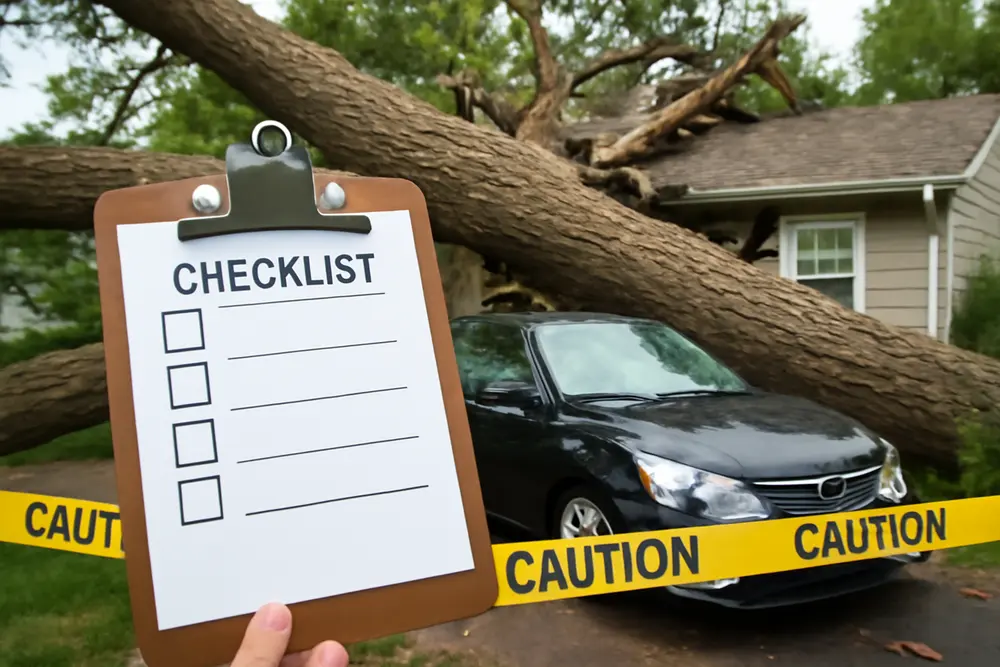

When a storm punts a tree onto your roof, time stops and gravity wins. Now it is you versus water, wind, and wood fibers with a grudge. This quick-yet-thorough guide breaks down the exact steps to handle fallen tree damage fast, how emergency shoring and tarping protect your home before the next cloudburst, and who to call so you do not end up paying twice for the same roof. Keep your phone handy and your feet off unsafe ladders. We will show you what to do, what not to touch, and how Best Option Restoration of Travis County coordinates the whole circus without dropping the ball.
Why Speed Matters
Fallen tree damage is a double-hit problem. First you have impact damage to framing, sheathing, and rafters. Then comes water intrusion, which starts wrecking drywall, insulation, flooring, and contents within hours. Mold can begin colonizing wet, warm materials in 24 to 48 hours. Fast emergency shoring prevents structural sagging or collapse, and tarping blocks more rain from turning a bad day into a full-gut rebuild. The faster you stabilize and dry, the less you replace, and the quicker your family gets out of repair limbo.
Immediate Safety Checks
Hit pause before you play hero. Clear everyone from the impacted rooms, then look outward. Downed power lines are a hard no. If any wires are touching the tree or the house, keep away and call your utility or 911. If you smell gas or hear hissing, shut off the gas at the meter only if you can access it safely, then call your gas provider. Shut off power at the main breaker if there is roof collapse, water pooling near outlets, or ceiling sagging with trapped water. If a tree is still pressing on the structure, that roof or wall can move without warning, so limit access to trained crews.
Document The Damage Like a Pro
Insurance adjusters love clear photos and clear timelines. Start outside with wide shots of the entire home, then move to close-ups of impact points, broken branches, torn shingles, punctured decking, rafters, soffits, and gutters. Take video while narrating what you see, the date, the storm details, and where water is entering. Indoors, document ceiling cracks, water trails, flooring damage, and wet contents. Keep damaged materials and do not toss debris until your insurer gives the green light. If you buy tarps or hire emergency shoring, keep every receipt.
Who To Call and In What Order
First, call your insurer to open a claim and ask about temporary repairs. Policies typically require you to mitigate further damage, which means tarps and emergency shoring are not optional. Next, call a certified arborist to size up safe tree removal. Finally, contact a restoration company that handles storm stabilization and water mitigation. Best Option Restoration of Travis County offers 24-7 emergency response, coordinates with arborists, handles emergency shoring and tarping, removes water, and rebuilds what was crushed. We also speak fluent adjuster and can help with documentation and estimates. If the tree is tangled with power lines, the utility company and arborist will coordinate before anything moves.
Emergency Shoring Basics
Emergency shoring is temporary structural support for a building that just got sucker punched. If your roof is sagging, rafters are cracked, a wall is leaning, or ceiling joists are split, shoring keeps everything from shifting while the tree is removed and repairs are planned. Common techniques include vertical posts under damaged rafters, raker shores braced against leaning walls, and strongbacks that redistribute weight across intact members. This is not a DIY arena. Incorrect shoring can make collapse more likely. A qualified restoration team will assess load paths, install the right configuration, and verify the structure is stable enough for safe tree removal. If a crane is needed, the shoring plan and crane plan must sync so the house does not flex when the tree weight comes off.
Tarping and Water Control
Water does not care about your deductible. If your roof is now skylight-optional, you need a tight seal quickly. Pros typically use 8 to 16 mil reinforced tarps, secured from the ridge to at least the eaves. They anchor with furring strips and screws through intact decking, not into split rafters. Edges are lapped in the direction of water flow, and penetrations get temporary flashing or butyl tape to keep wind-driven rain out. Avoid stacking bricks or rocks as weights, since they can slide in the next gust and cause more damage. Ladder safety matters: set a stable base, tie off if possible, and never climb onto a roof that is bowed or slick. If conditions are unsafe, wait for an emergency tarping crew.
Inside, control dripping with buckets and plastic sheeting. If a ceiling is ballooning with water and power is shut off, a carefully placed relief cut can drain the bubble into controlled containers, but only if the area beneath is safe and there are no live circuits nearby. Once the weather passes, remove wet insulation fast so the ceiling does not keep sagging from water weight.
Interior Mitigation Steps
After tarping and shoring, the clock is ticking on moisture. Pros start with water extraction, then open up wet cavities to allow airflow. That often means removing saturated drywall and insulation to at least 12 to 24 inches above the moisture line. Targeted demolition is cheaper than replacing an entire room later. Dehumidifiers and high-velocity air movers control humidity and drive evaporation. Moisture meters track progress so materials are dried to acceptable levels, not just to the touch. Antimicrobial agents can be applied on framing where clean water intruded, and more robust sanitizing methods are used if outdoor water or soil entered. Do not bleach porous materials. It is ineffective at reaching organisms inside drywall or wood and can cause more damage.
Tree Removal With a Certified Arborist
Tree removal without a plan is how you turn a roof dent into a full cave-in. A certified arborist will judge the load path, choose safe cut points, and set up rigging that lowers sections without swinging into your siding. Cranes are common for large live oaks and pecans in Austin, especially when the trunk has speared through the structure. If remaining limbs are overhanging the roof, pruning might be advised to reduce future risk. Debris should be staged for your insurer to review if they request it, then hauled off per local guidelines.
Permits and Local Rules in Austin
After storm impacts in the Austin area, some emergency work can proceed quickly, but permits may still be required for structural repairs and certain types of tree work. Austin’s emergency repair process allows immediate stabilization for life-safety issues with follow-up permits. Heritage and protected trees often require permits, but emergency removal is generally allowed when the tree is an immediate hazard. Document everything, take photos prior to removal where safe, and follow up with the City of Austin for permit details. Check current rules at austintexas.gov/emergency-permits and confirm any arborist permitting requirements before non-emergency pruning or removal.
Working With Insurance
Open the claim early and keep it organized. Send your adjuster a concise packet: event date and time, damage photos and video, emergency shoring and tarping invoices, arborist assessment, and any temporary housing costs if the home is not safe to occupy. Most policies require you to prevent further damage, which is where emergency shoring, tarping, and water mitigation come in. Coverage nuances vary, especially when a neighbor’s tree is involved. The general rule is that your policy covers your home, regardless of whose tree did the damage, though liability can shift later if negligence is proven. Ask your adjuster about how depreciation, deductibles, and code upgrades will be handled. Best Option Restoration can supply detailed estimates, scope notes, and moisture logs that help your claim move faster.
Full Restoration Timeline
Once the roof is covered, the water is out, and the tree is gone, the real rebuild begins. A typical sequence looks like this. A project manager confirms structural stability, takes measurements, and writes a repair scope with photos and line-item estimates. Interior contents may be cleaned on site or packed out for off-site storage if a large rebuild is needed. Structural drying continues with daily monitoring until materials reach target moisture. Roof framing is repaired or replaced, then decking and underlayment are installed, and new shingles or metal panels go on. Damaged windows or doors are replaced, exterior trim is repaired, and paint is matched. Inside, insulation is installed, drywall is hung, taped, and textured, then primer and paint go on. Flooring repair or replacement follows, along with baseboards and finish carpentry. Finally, the home is cleaned and any deodorization is completed. If permits and inspections are required, your restoration contractor should coordinate those so you are not juggling red tape.
Quick Checklist
| Step | Action | Why It Matters |
|---|---|---|
| 1 | Evacuate impacted rooms, watch for lines and gas, shut off utilities if safe. | Prevents electrocution, fire, and collapse injuries. |
| 2 | Photograph and video everything, inside and out, before moving items. | Creates solid documentation for your claim. |
| 3 | Call insurer, certified arborist, and a restoration company. | Gets approvals moving and books the right crews. |
| 4 | Install emergency shoring where rafters or walls are compromised. | Stops progressive failure when the tree shifts or is lifted. |
| 5 | Tarp roof openings from ridge to eaves, secure edges, seal penetrations. | Blocks rain and reduces interior damage. |
| 6 | Extract water, remove wet insulation and drywall as needed, start drying. | Limits mold growth and secondary damage. |
| 7 | Coordinate safe tree removal with arborist, crane if needed. | Prevents extra damage during extraction. |
| 8 | Submit invoices and estimates to your adjuster, keep all receipts. | Speeds claim approval and reimbursements. |
| 9 | Check Austin permits for structural repairs and tree rules. | Keeps your rebuild compliant and on schedule. |
| 10 | Move into full restoration with licensed, insured contractors. | Completes the job safely and to code. |
DIY Moves To Avoid
Tempted to chainsaw the trunk yourself while it is still on the roof? Skip it. That load is unpredictable and can roll, snap, or shift a wall with one wrong cut. Do not walk on a roof that is bowed or cracked. Do not staple a tarp directly into broken rafters. Do not turn on household fans or power in soaked rooms until a pro clears electrical hazards. And do not throw out debris or wet materials before documenting them for your insurer.
What Emergency Shoring Looks Like
If you are wondering what you will see when a crew performs emergency shoring, think clean lumber, tight angles, and no guesswork. Vertical shores will be spaced under compromised rafters, often landing on stable beams or distributed across the floor with plates to avoid punching through subfloor. Raker shores on the outside of a leaning wall will run diagonally down to the ground, pinned at the wall plate and braced at the base. Strongbacks will tie broken members to adjacent intact ones so loads transfer safely. The goal is not pretty, it is stable. Then the arborist can remove tree weight while the house holds steady.
Weather-Proofing Beyond The Tarp
Tarping is step one, but weather is crafty. Crews may install temporary drip edges, add plastic to gable vents, seal window breaks with plywood and house wrap, and use sandbags or diverters to keep runoff aimed away from entry points. Gutters stuffed with leaves from the fallen tree might be overflowing, so a quick clean out helps. If your attic access is inside a living space, plastic containment can block dust and prevent new debris from spreading while tree removal and shoring are underway.
How Best Option Restoration Helps
Best Option Restoration of Travis County is built for storm days. Our 24-7 emergency team handles tarping, board-ups, and emergency shoring to stabilize fallen tree damage quickly. We set up water extraction and drying equipment, document moisture readings for your adjuster, and coordinate with certified arborists for safe tree removal. From there, our reconstruction team repairs framing, roofing, drywall, paint, flooring, and finishes so you do not have to juggle a dozen vendors. We are insurance-friendly and can assist with estimates, scope clarifications, and photo documentation. Learn more about our process at Best Option Restoration storm damage restoration.
FAQs
Is My Home Safe To Stay In After A Tree Hits It?
If the impact damaged structural members or the roof is open to the sky, assume it is unsafe until a pro checks it. If only minor branches scraped shingles, you may not need to leave, but always get a qualified assessment first. When in doubt, relocate until emergency shoring and tarping are complete.
Who Pays If My Neighbor’s Tree Damaged My House?
In many cases, your policy covers your home, even if the tree started on your neighbor’s property. If the neighbor neglected a known hazard, their liability coverage might come into play later. File your claim promptly and let the insurers sort out responsibility.
Will My Insurance Cover Emergency Shoring and Tarping?
Most policies expect you to take reasonable steps to prevent further damage, which includes tarping and emergency shoring. Keep invoices and submit them with your claim. Your adjuster can confirm specifics for your policy.
How Fast Does Mold Start After Water Intrusion?
Given warm temperatures and organic materials, mold can begin in 24 to 48 hours. Fast extraction and drying reduce the risk dramatically. Do not assume a surface is dry because it feels dry. Moisture meters tell the real story.
Can I Tarp The Roof Myself?
You can if the structure is safe, the ladder is stable, and you have the right materials. Many impacts are not safe for DIY. If you see structural sagging, broken rafters, or live wires, step back and call an emergency tarping team.
What Exactly Is Emergency Shoring?
Emergency shoring is temporary support for damaged structural components so the building does not move or collapse while the tree is removed and repairs are planned. It uses engineered placements of posts, braces, and connectors to carry loads safely until permanent fixes are installed.
Austin-Smart Tips
Those Central Texas winds mean you will often see limb failures on live oaks with heavy canopies. Regular pruning by a certified arborist helps prevent future hits. Consider an impact-resistant roofing option when you reroof. Keep gutters and downspouts clear during storm season so when a tarp goes on, water has a clean exit path. Program your insurer’s claim line and Best Option Restoration’s emergency number into your phone now so you are not scrambling later.
Call Best Option Restoration
If a storm turned your roof into a tree stand, call Best Option Restoration of Travis County. We stabilize with emergency shoring, keep the rain out with pro tarping, dry the interior before mold takes the stage, and rebuild the structure with care. Fallen tree damage does not have to become a months-long migraine. We bring the lumber, not the drama, and we are ready 24-7 to help you get your home back on its feet.