
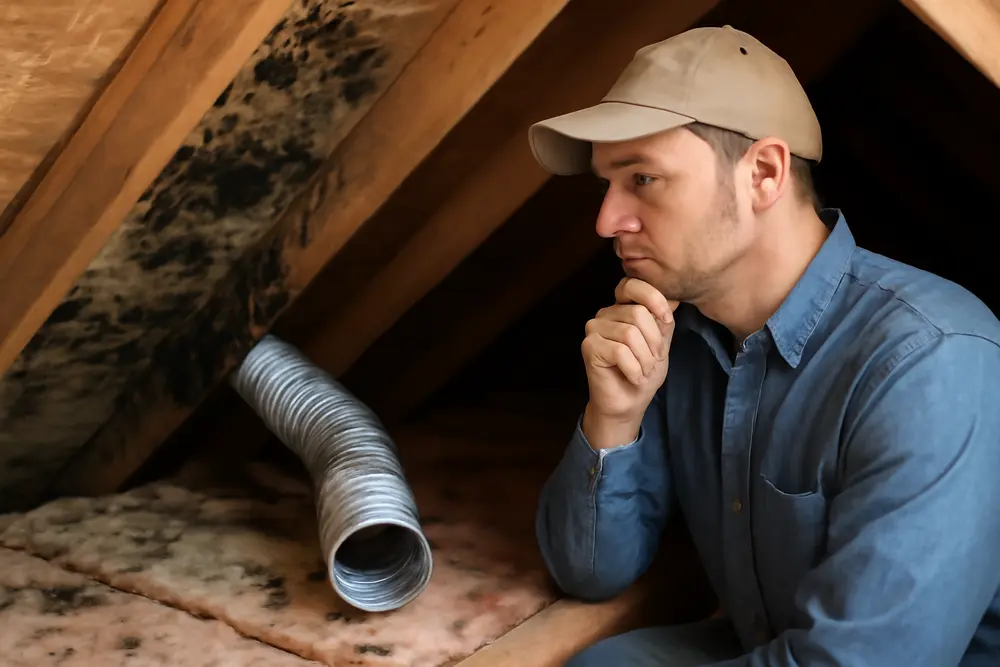

If your attic smells like a locker room and your roof sheathing looks like it lost a fight with a pepper shaker, your bathroom fan might be the snitch. Attic mold loves warm shower steam that dumps into cold attic air, and a mis-vented fan is basically serving it a buffet. The good news: you can clean it up safely and fix the root problem so it doesn’t boomerang back. Let’s talk about why attic mold shows up when bathroom fan venting is wrong, what safe cleanup really looks like, and the permanent fixes that keep your attic dry and boring again.
Why Bathroom Fans Feed Attic Mold
Shower steam is warm and loaded with moisture. If your bathroom fan sends that steamy air into the attic instead of outdoors, it hits cold wood, nails, and sheathing. Moist air meets cold surface, water condenses, and now you’ve got a damp attic. Mold adores that party. In winter, the temperature swing is bigger, so condensation ramps up. Wet insulation slumps, loses R-value, and holds moisture against wood. That speeds up staining, fungal growth, and in long-neglected cases, decay. It’s the fast track to attic mold and a slow leak in your energy bills.
Home inspectors see this constantly: ducts that stop short in the attic, flex duct tossed over rafters with no termination, or a fan discharging right under a roof deck. All of those are mold invitations. For a good explainer on the risks, check out this overview on bathroom fans venting into attics from Inspection Time TX here.
Spotting The Problem
Attic mold from bathroom fans rarely shows up alone. You’ll usually spot a combo platter of symptoms if you pop your head through the hatch. Look for gray, green, or black staining on the roof sheathing, fuzzy growth on rafters, rusty nail tips poking through the roof deck, matted insulation, and that classic musty odor. In colder months you might even see frost on the underside of the roof that melts and drips when the sun hits. If your bathroom ceiling paint is peeling or the fan drips in winter, that’s another red flag.
| Symptom | Likely Cause | Quick Check |
|---|---|---|
| Dark spotting on sheathing | Condensation from mis-vented fan | Follow the duct. Does it exit outdoors? |
| Wet or slumped insulation | Trapped moisture reducing R-value | Lift a corner. Is it damp or compressed? |
| Musty odor in attic | Mold growth on wood or insulation | Sniff test near roof peak and over bathrooms |
| Frost in winter, drips when it warms | Moisture hitting cold roof deck | Look on cold mornings after showers |
Safe Cleanup Steps
Cleaning attic mold is part safety, part method, and all about drying things fully. If you’re healthy and the affected area is small, you can tackle it with the right gear and patience. If it’s widespread, has soaked into insulation across a big area, or there’s structural damage, call a pro. Here’s how to handle it the right way.
Start by sizing up the scope. The EPA’s general guidance is that small areas can be homeowner jobs and large or complex areas call for remediation. Mold that covers a large portion of the roof deck, involves HVAC, or hides behind finished surfaces is a pro-level project. EPA’s basic mold cleanup steps are outlined here.
Protect yourself. Wear an N95 or better respirator, gloves, and eye protection. For heavy growth or overhead scrubbing, disposable coveralls help a lot. The CDC’s mold cleanup page covers PPE basics here. If you have respiratory issues, sit this one out and get help.
Control the mess. Tape plastic over the attic hatch to create a flap you can seal. Cover stored items and the area below the hatch. A small negative air setup with a fan in a window can help pull dust outside, but at minimum, keep the attic closed off to the living space. Use a HEPA vacuum on surfaces before and after scrubbing so you’re not just smearing spores around. A solid containment walkthrough is available here.
Remove what cannot be cleaned. Porous stuff like fiberglass or cellulose insulation that is wet or visibly moldy should be bagged and removed. There’s no good way to scrub a million air pockets. If drywall or stored cardboard is affected, it usually has to go too.
Clean what can be saved. Wood framing and roof sheathing are typically cleanable unless they are structurally damaged. Use a detergent and water solution and scrub with a stiff nylon brush. Rinse with clean water on a lightly damp cloth and avoid soaking the wood. Some folks reach for bleach, but bleach is not needed on most building wood. The key is physical removal and drying. After cleaning, HEPA vacuum again to capture residue.
Dry it completely. Moisture left in the attic is a restart button for mold. Use air movers and, if needed, a dehumidifier aimed into the attic space from the hatch. You’re aiming for wood moisture content under about 15 percent and normal attic humidity. Drying also reveals any staining vs remaining growth.
Inspect for damage. If the roof sheathing is soft or punky, or fasteners have corroded badly, get a roofer or restoration pro to check structural integrity. Mold can stain deeply and still be safe once cleaned, but decay is a different story.
Know when to phone a friend. Call a professional remediation team if the area is large, if the attic contains vermiculite or other suspect insulation, if you see mold in HVAC ductwork, if the roof structure looks compromised, or if anyone in the home has health sensitivities. Best Option Restoration of Travis County handles mold cleanup from assessment to final clearance testing. You can see our approach to mold removal and moisture control here.
Permanent Fixes That Stick
Mold cleaning without moisture control is like mopping with the faucet still on. Lock in these fixes to stop attic mold from making a comeback.
Vent The Fan Outdoors
Bathroom fans should never end in the attic. Terminate the duct to the exterior with a proper roof cap or wall hood that includes a backdraft damper. Avoid dumping into a soffit cavity or near intake vents where moist air can get sucked right back in. Keep the run as short and straight as possible and upsize to a larger duct if the fan allows it. A 4 to 6 inch smooth metal duct beats long runs of skinny, kinked flex every time. A simple roof or wall termination with a damper also cuts cold backflow and reduces winter condensation at the fan.
Insulate and Seal The Duct
Uninsulated duct in a cold attic is a dew factory. Wrap flexible duct with at least R-8 insulation or use insulated flex rated for bath fans. Seal every joint with mastic or foil tape rated for HVAC. Support the duct so it does not sag and pool water. Slope the run slightly toward the exterior hood so any condensation drains out rather than back toward the fan. These steps improve airflow and reduce water droplets forming in the line, both of which help prevent attic mold.
Air Seal The Bathroom Ceiling and Attic
Even a correctly vented fan cannot fix a leaky lid. Seal the fan housing to the drywall, then seal all bathroom ceiling penetrations: can lights, electrical boxes, plumbing penetrations, and the top plate at wall perimeters. In the attic, use foam or caulk to close gaps around wires and pipes. Cap and seal any abandoned ducts. Air leaks push warm moisture into the attic 24-7, showers or not. Air sealing starves mold of the constant moisture it craves and improves comfort downstairs too.
Balance Attic Ventilation
Attics need intake and exhaust so air can move and materials can dry. That usually means open soffit vents for intake and a continuous ridge vent or well sized roof vents for exhaust. Make sure insulation baffles keep soffit vents clear and that fluffy insulation has not been shoved into the overhangs. Gable vents can help in some setups, but avoid running a powered attic fan that might pull conditioned air from the house if the ceiling is leaky. The goal is gentle, steady airflow, not a hurricane. Details on balancing airflow and keeping baffles clear are covered in this attic mold guide here.
Size and Use The Fan Right
Undersized or noisy fans that no one runs are basically decorative. Choose an HVI-rated fan sized for the bathroom. Many small baths do fine with 50 to 80 CFM, and larger or jetted-tub baths often need 100 CFM or more. Install a timer or humidity-sensing control so the fan actually runs long enough to clear moisture. A simple habit that pays off: run the fan during your shower and for at least 20 minutes after. If mirrors still fog forever, you need more airflow or a shorter run to the outside.
Maintenance and Quick Checks
Once the attic is dry and the fan vents outside, a few habits and seasonal checks keep things on track. Clean the fan grille every few months so airflow stays strong. In winter, peek into the attic on a cold morning after showers and look for fresh condensation under the roof deck. If you see droplets, investigate the vent run for disconnections, dips, or a stuck exterior damper. Check that soffit vents are clear and baffles are in place after any insulation work. Keep indoor humidity under about 50 percent. If you have a very tight home or lots of long showers, a small dehumidifier in the living space can help the whole structure stay drier.
Attic Mold FAQ
Is It Ever OK To Vent A Bathroom Fan Into The Attic?
No. Bathroom fan venting should always discharge outdoors through a proper roof or wall cap with a damper. Terminating in the attic feeds moisture and leads to attic mold and material damage. Even venting into a soffit cavity can reintroduce moisture to the attic through intake vents.
Can I Just Spray Bleach On Attic Mold And Call It Good?
Bleach is not the magic fix people think it is. On most building wood, physical cleaning with detergent and water, HEPA vacuuming, and full drying are the keys. Bleach can create fumes and it does not remove the particles that trigger allergies. The EPA’s basic guidance is focused on cleaning and drying rather than bleaching. You can read it here.
How Much Mold Can I Clean Myself?
Small, localized areas on accessible wood are reasonable DIY if you use proper PPE and containment. Large areas, structural damage, or mold that involves insulation across a big section of the attic usually needs professional remediation. The CDC’s PPE advice for mold cleanup is here.
Do I Have To Replace Moldy Roof Sheathing?
Often no. If the sheathing is still structurally sound, cleaning, drying, and fixing the venting and air leaks is enough. Staining can remain after proper cleaning. If the wood is soft, delaminated, or crumbling, that is a repair or replacement conversation with a roofer.
Will Adding A Ridge Vent Solve Attic Mold By Itself?
Probably not. Ventilation helps, but if a bathroom fan still dumps moisture into the attic or the bathroom ceiling leaks air, you will keep feeding the problem. Fix the moisture source first, then make sure the attic has balanced intake and exhaust.
Should I Put A Dehumidifier In The Attic?
Usually no. If you correct bathroom fan venting, seal air leaks, and provide balanced attic ventilation, an attic dehumidifier should not be needed. Use one temporarily during drying if a pro recommends it, but permanent attic dehumidification is a band-aid for a source problem.
Can I Connect A Dryer Or Another Fan To The Same Duct?
Do not do that. Each bath fan and the dryer need their own dedicated, properly sized duct that terminates outside. Shared ducts cause backflow, lint and moisture buildup, and serious airflow losses.
What A Proper Fix Looks Like
A clean, dry attic starts with bathroom fan venting that exits outdoors through a short, insulated, sealed duct and a real exterior hood with a working damper. The bathroom ceiling is air sealed around the fan and every other penetration. The attic has clear soffit intake, a ridge or other exhaust vent sized to match, and baffles that keep insulation from choking the airflow. The insulation is dry, fluffy, and not matted against the roof deck. The fan is quiet enough that you actually use it and smart enough to keep running after showers. That setup keeps moisture moving out of the home instead of up into your roof.
Need Help In Travis County?
If your bathroom has been fogging up your attic like a sauna, we can shut that party down. Best Option Restoration of Travis County handles attic mold cleanup, source tracking, and the fixes that keep it from coming back. From HEPA vacuuming and wood cleaning to sealing air leaks and coordinating proper bathroom fan venting, we’ve got you covered. Check out our mold service details here and our water damage restoration work here. If you want your attic to stop growing a science project and get back to just being an attic, schedule an inspection and we’ll get a plan moving.